Fall 2025 Debate: International Students
Debate: Are U.S. Colleges too Dependent
on International Students?
Thursday, November 6, 2025, 7:00 p.m
Wong Auditorium (E51-115)
On Thursday, November 6, 2025, the MIT Free Speech Alliance, joined by the MIT Open Discourse Society, held its sixth campus debate, in which teams debated the following resolution:
Resolved, American Universities are too Dependent on International Students
The affirmative team consisted of James Fishback, founder and CEO at Azoria and founder of Incubate Debate, and Nathan Halberstadt, partner at New Founding.
The negative team consisted of David Freed, entrepreneur and former Chief Operating Officer of Crimson Education, and Chris Glass, Professor of the Practice at Boston College and Editor of International Higher Education.
Serving as moderator was Anant Agarwal, professor post-tenure of computer science at MIT, founder of edX, and chief academic officer of 2U.
Debate Recording
MFSA's Debate was livestreamed through our YouTube channel, and you can watch it below. The recording will remain in place after the debate's completion for continued viewing.
Debate Photos

The resolution for this fall's debate was: "Resolved, American universities are too dependent on international students."

MFSA Board of Directors member Steve Carhart opens the proceedings
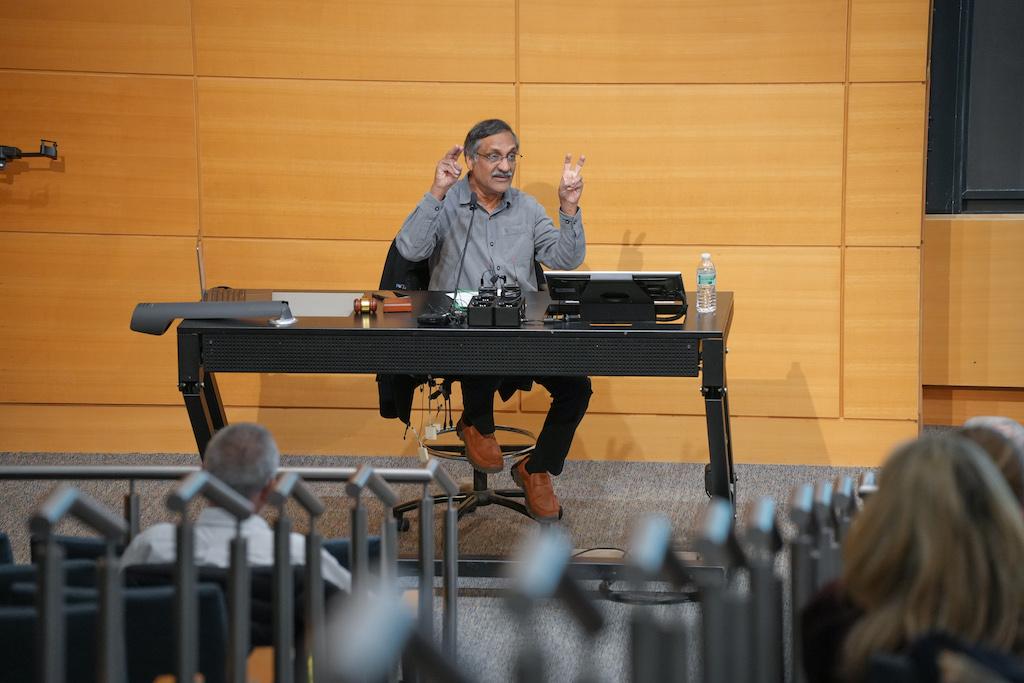
Debate moderator Anant Agarwal, founder of edX and chief academic officer of 2U
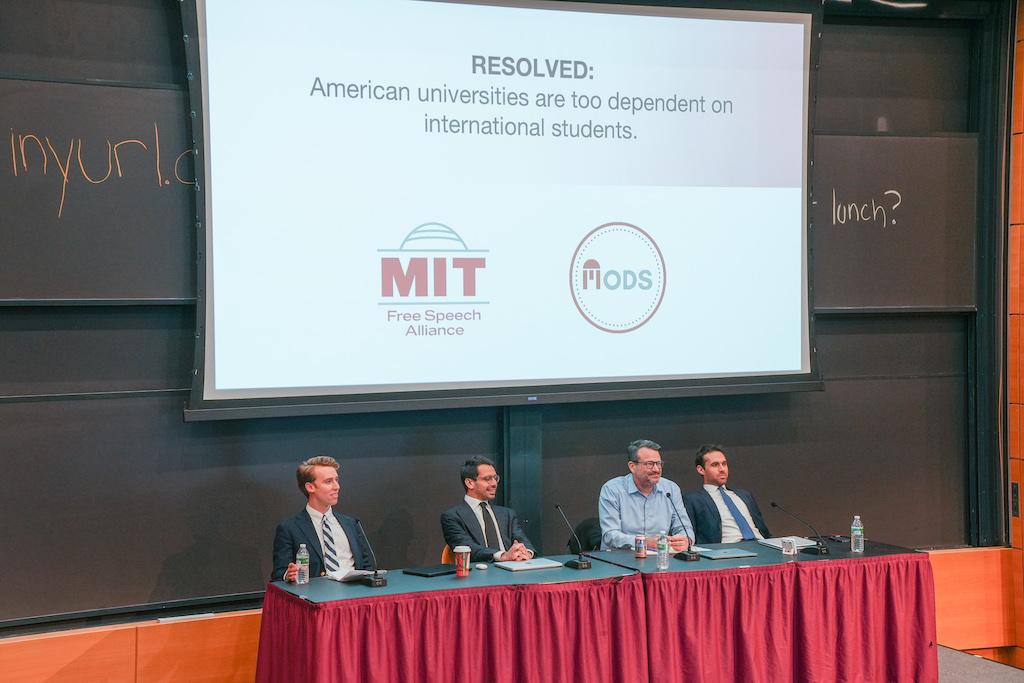
From left to right, Affirmative team members Nathan Halberstadt and James Fishback, and Negative team members Chris Glass and David Freed

Nathan Halberstadt arguing for the affirmative
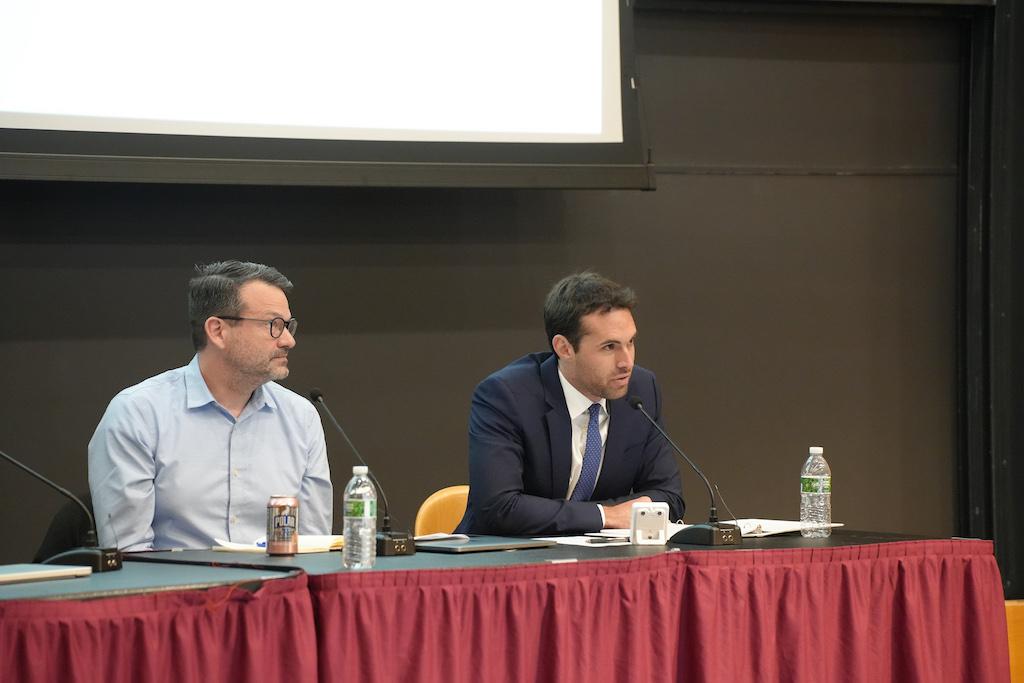
David Fried responding for the negative team
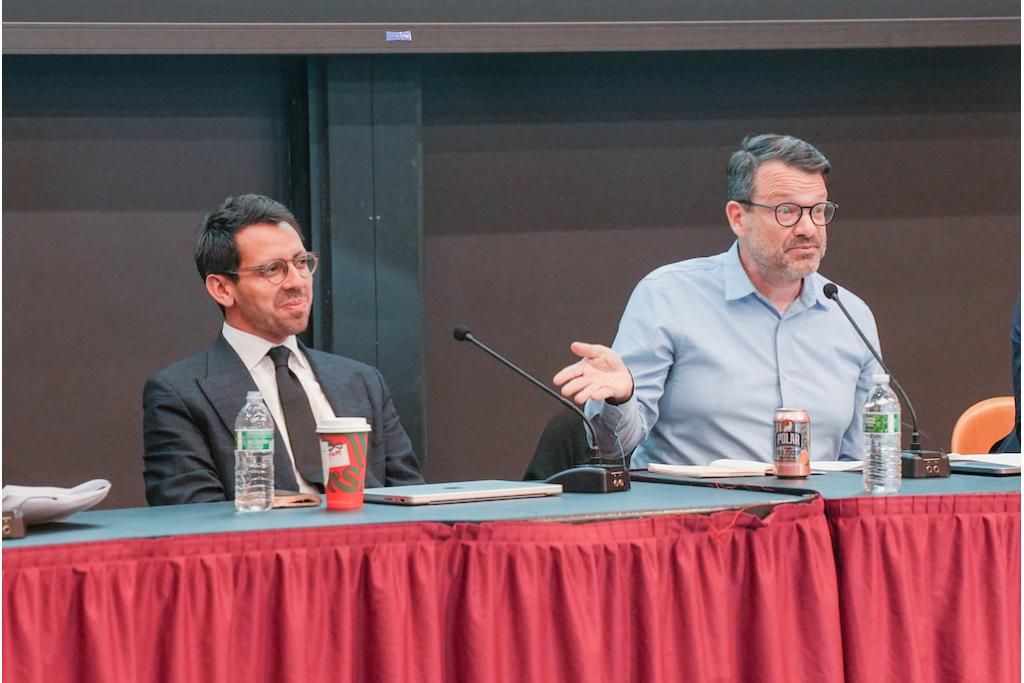
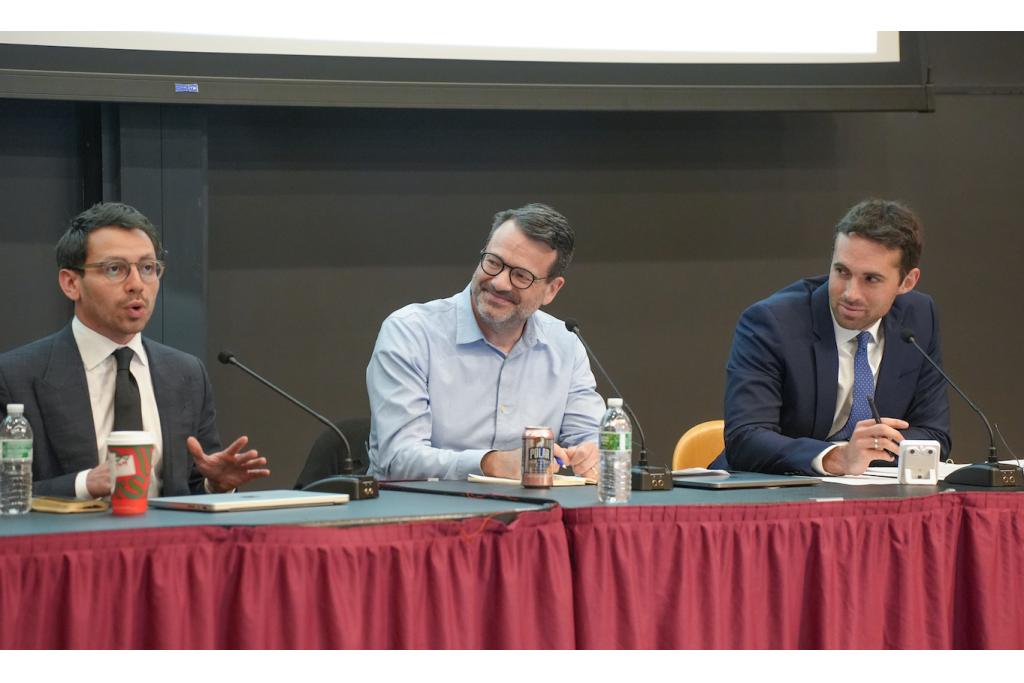
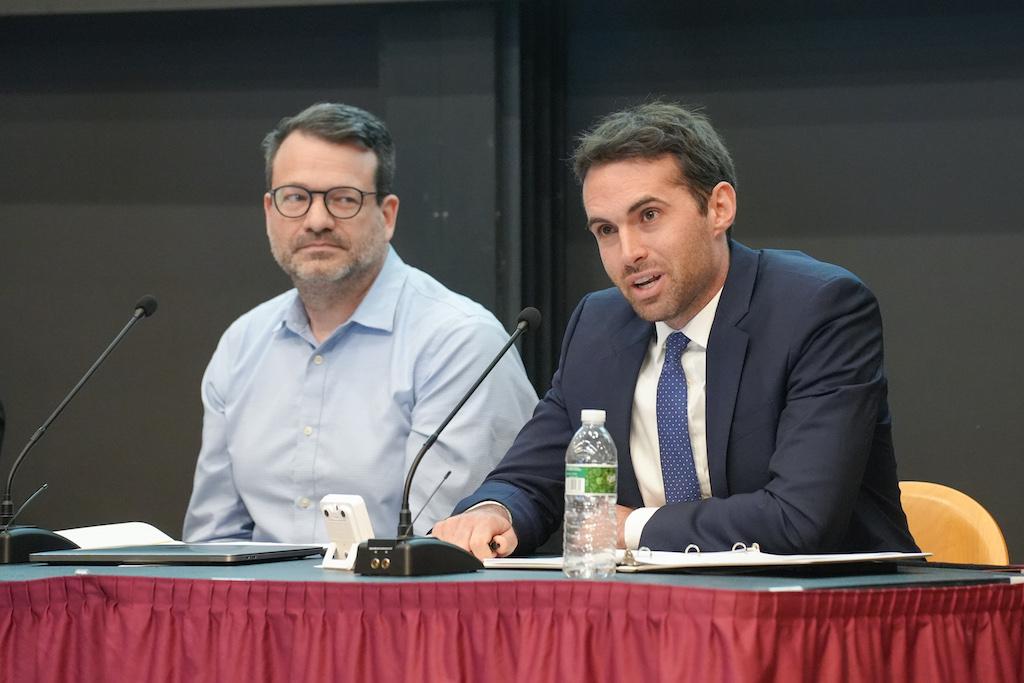
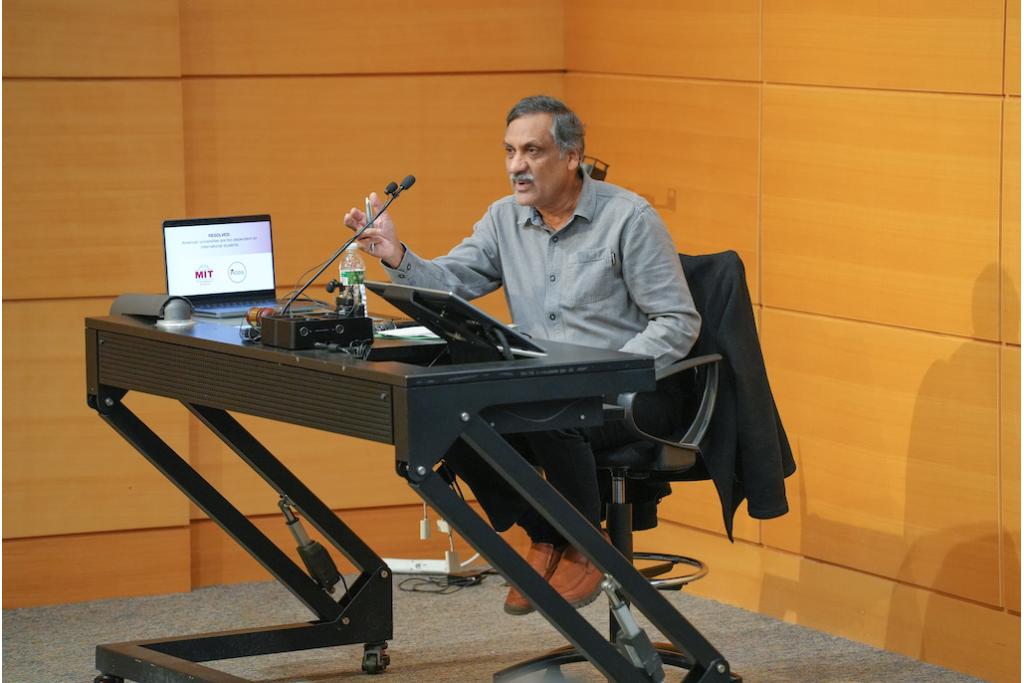
Professor Agarwal overseeing the Q&A session
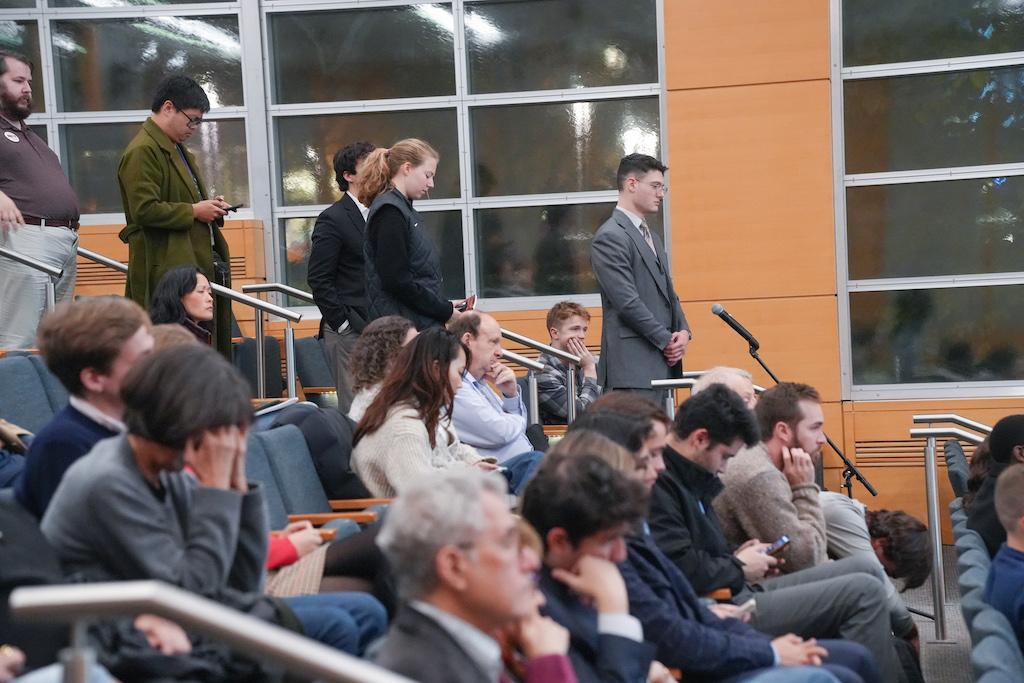
As usual, members of the community came ready with excellent questions, sending the program into overtime
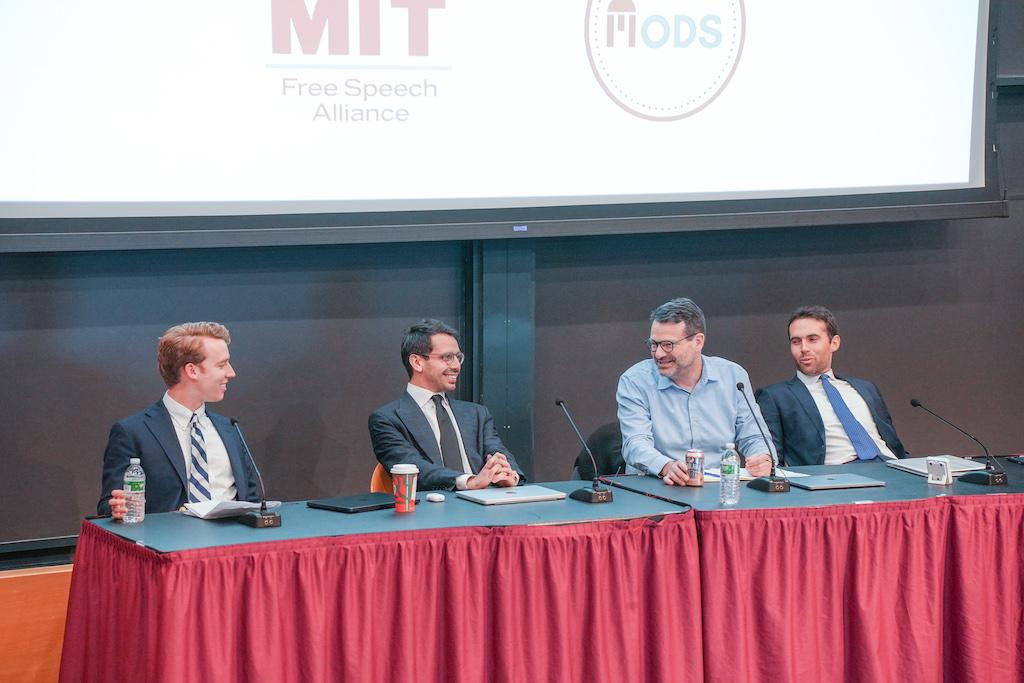
Free speech wins when we can argue difficult issues in a civil fashion. Thanks to our debaters for participating and to all of our audience members!
Debate Participants
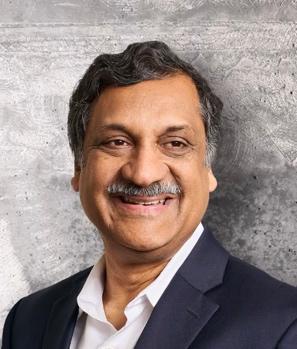
Anant Agarwal (Moderator) is Chief Academic Officer of 2U, founder of edX, and professor of electrical engineering and computer science at MIT. Prior to becoming Chief Academic Officer, Agarwal served as 2U’s Chief Platform Officer.
Since launching edX in 2012, Agarwal has guided the organization’s vision to expand access to high-quality education for everyone, everywhere. Today at 2U, he leverages his expertise in building powerful online learning platforms to drive edX’s growth as one of the world’s most comprehensive free-to-degree online learning marketplaces.
As the first educator to teach an edX course on circuits and electronics from MIT, Agarwal drew 155,000 students from 162 countries. He remains a professor of electrical engineering and computer science at MIT today. Previously, he served as the director of CSAIL, MIT's Computer Science and Artificial Intelligence Laboratory.
Agarwal is a successful serial entrepreneur, having co-founded several companies including Tilera Corporation, which created the Tile multicore processor, and Virtual Machine Works. He has received multiple accolades over the years for his pursuit of great educational innovation. He won the Maurice Wilkes prize for computer architecture and MIT's Smullin and Jamieson prizes for teaching. He is also the 2016 recipient of the Harold W. McGraw, Jr. Prize for Higher Education, which recognized his work in advancing the MOOC movement. Additionally, Agarwal is a recipient of the Padma Shri Award from the President of India and was named the Yidan Prize Laureate for Education Development in 2018.
A pioneer in computer architecture, Agarwal is a member of the National Academy of Engineering, a fellow of the American Academy of Arts and Sciences, and a fellow of the ACM. Scientific American selected his work on organic computing as one of 10 World-Changing Ideas in 2011, and he was named in Forbes' list of top 15 education innovators in 2012.
Agarwal held a Guinness World Record for the largest microphone array, is an author of the textbook "Foundations of Analog and Digital Electronic Circuits,” and in his spare time he hacks on WebSim, an online circuits laboratory. He holds a Ph.D. from Stanford and a bachelor's from IIT Madras.
James T. Fishback is the Founder and CEO of Azoria, a free-thinking investment firm. He is also the founder of Incubate Debate, the fastest-growing debate league in America. Incubate hosts no-cost, in-person tournaments for thousands of middle and high school students and equips teachers nationwide with a free toolkit to host in-class student debates tied directly to the curriculum. His work has earned praise from Vivek Ramaswamy, who said that James “is a major star in our pro-America movement,” and Bari Weiss who said that what James has built at Incubate Debate “gives me hope.”
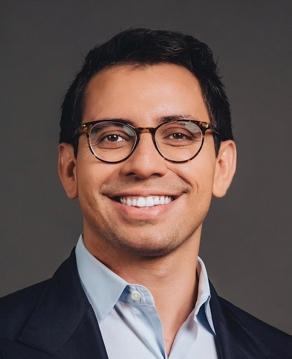
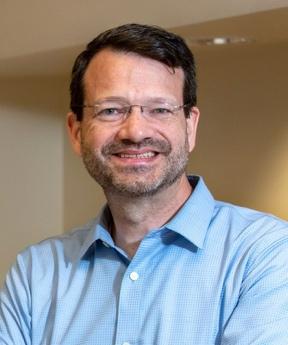
David Freed is the founder of OnCall AI, a medical technology firm focused on streamlining the administrative bloat of the American healthcare system. He previously was the Chief Operating Officer of Crimson Education, helping students around the world find and get into their dream universities. He studied mathematics, economics, and statistics while at Harvard University, and writes regularly online about the intersection of business, labor economics, and sports. His prior work has been cited in The New York Times, ESPN, and The Atlantic.
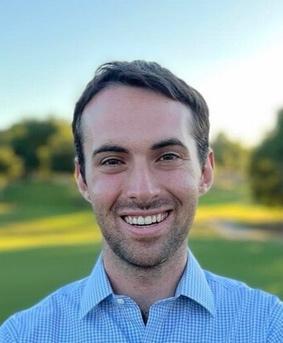
Chris R. Glass is a Professor of the Practice in the Department of Educational Leadership and Higher Education at Boston College where he leads the Executive Doctor of Education (Ed.D.) in Higher Education program and serves as an affiliated faculty member in the Center for International Higher Education (CIHE). His research and writing focus on global student mobility, virtual mobility and exchange, as well as equity, inclusion, and sustainability in international higher education.
His research has been published in Studies in Higher Education, Higher Education Research and Development, Journal of Studies in International Education, Compare, International Journal of Intercultural Relations, and the International Journal of Educational Development.
Glass is an active member of the Comparative and International Education Society (CIES) and the Study Abroad and International Students SIG. He has a deep commitment to the transformative power of international education, developed through years of leading study abroad programs and strengthened by personal connections with international students and scholars around the world.
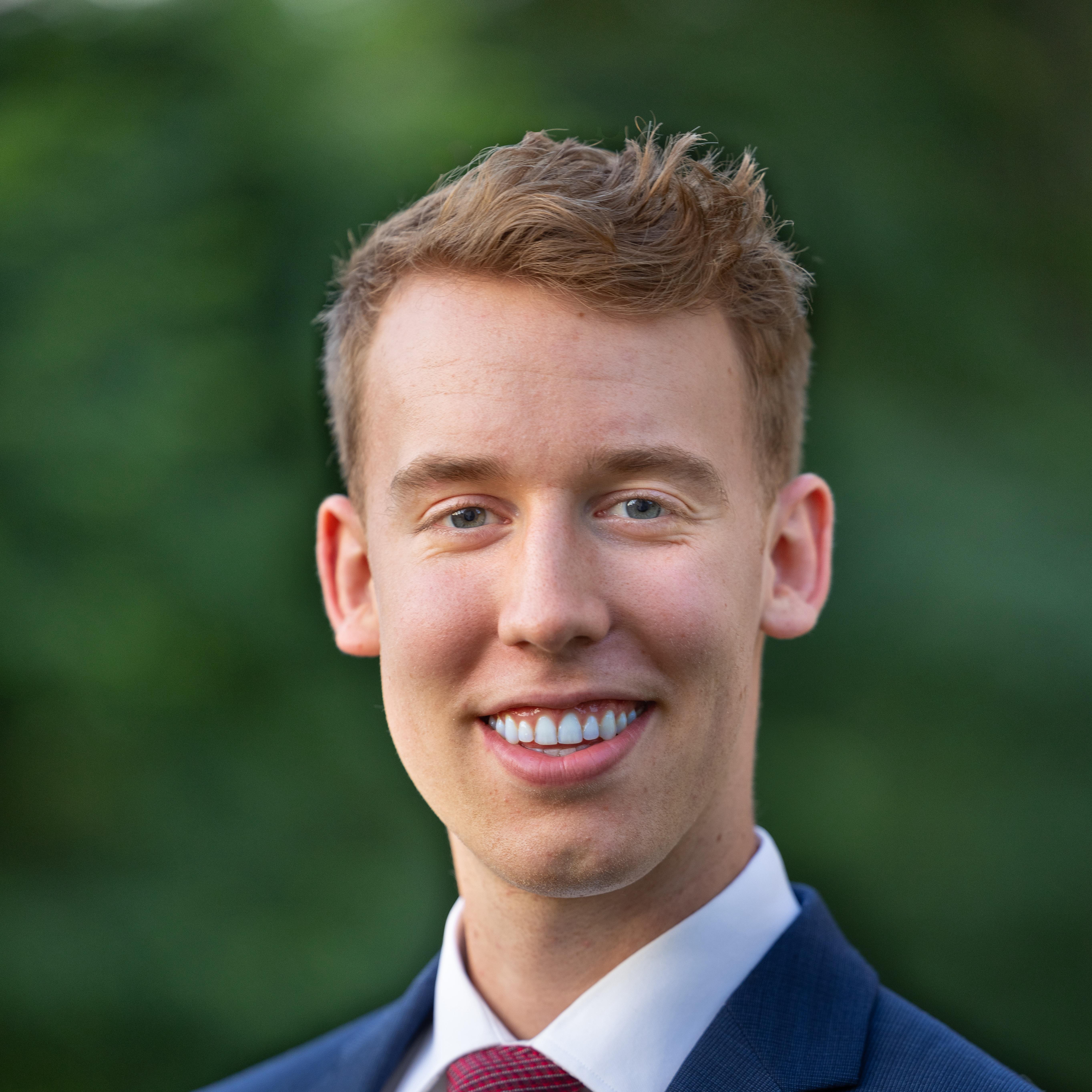
Nathan Halberstadt is a Partner at New Founding, a venture firm focused on critical civilizational problems. Nathan studied neuroscience and history at Vanderbilt University and began his career at Boston Consulting Group (BCG) focused on the industrial goods sector. He has written on managerialism, AI, and coalitional dynamics in the New Right for UnHerd, The American Conservative, and American Reformer. His work has been featured on the All-In Podcast and Matt Walsh Show. Nathan has made interview appearances on platforms including The Pomp Podcast, The Wade Stotts Show, OANN, Timcast, and UnHerd. He is a fellow at State Leadership Initiative. You can find him on X at @NatHalberstadt.
Debate Co-Sponsors
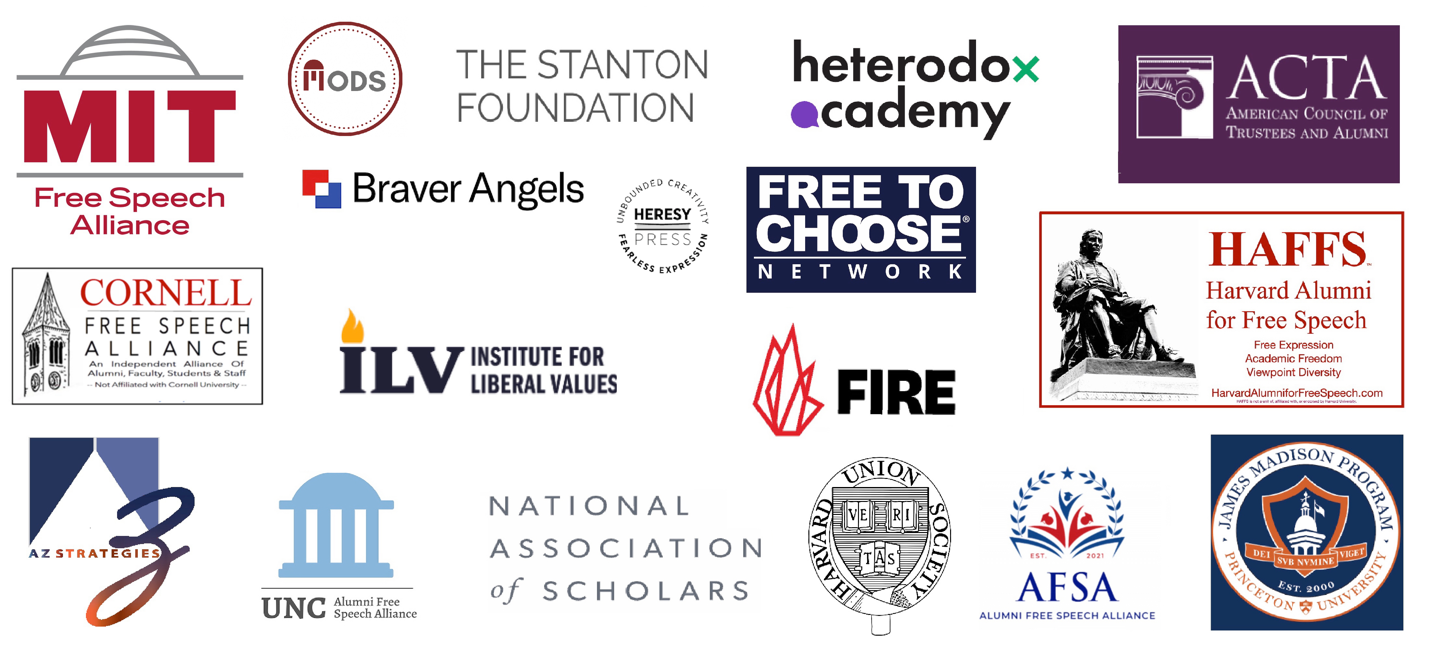
MFSA and MODS are pleased to be joined by the following organizations, whose names appear in our materials as organizations sharing MFSA’s commitment to free inquiry, and to presenting programming confronting difficult and controversial topics:
- Alumni Free Speech Alliance
- American Council of Trustees and Alumni
- Arizona Strategies
- Braver Angels
- Cornell Free Speech Alliance
- Foundation for Individual Rights and Expression
- Free to Choose Network
- Harvard Alumni for Free Speech
- Harvard Union Society
- Heresy Press
- Heterodox Academy
- Institute for Liberal Values
- Incubate Debate
- James Madison Program at Princeton University
- National Association of Scholars
- The Stanton Foundation
- UNC Alumni Free Speech Alliance
Transcript from the Debate:
(Transcription is Auto-Generated but Reformatted for an Easier Read)
Host: Good evening everybody. Welcome to our event tonight. On behalf of the executive committee and members of the MIT Free Speech Alliance, it's my pleasure to welcome you to this event along with the MIT un-censored, in addition to 20 other free speech-oriented organizations listed on the screen who are our co-sponsors. In addition to welcoming everyone here in person, I want to welcome everyone who is watching remotely through our live stream and everyone who will see this video later on the MIT Free Speech Alliance YouTube channel.
Host: Watching tonight's debate is valuable, but engaging directly is where the real learning is. That's why we're partnering with Swayable, a chat platform developed by the Hetarodox Academy that pairs you one-on-one with someone who disagrees with you after this event. Through AI-facilitated conversations, you can dive deeper into tonight's arguments, test your reasoning, and practice the art of constructive disagreement. It's an opportunity to continue this important discussion in a structured, meaningful way. There will be QR codes passed out that you can use to join this discussion later at your convenience.
Host: Before introducing our moderator, I want to explain why we hold these events. These debates were established in reaction to an academic speaker who was cancelled from an MIT presentation because of personal views that he held unrelated to his academic work. This signaled to many of us that even MIT was falling away from the dedication to free expression and open discourse which we hold dear and which is central to the American academic tradition. So we, as the alumni body of the Free Speech Alliance, established this tradition of debates to demonstrate that it is possible to have a civil and constructive discussion of difficult and challenging topics.
Host: Our moderator tonight is Professor Anant Agarwal from the Department of Computer Science and Engineering. Professor Agarwal is the Chief Academic Officer and founder of edX, which has been instrumental in pioneering and bringing large-scale open learning to many places throughout the world using the internet. He was a pioneer at that. Before his work there, he did many entrepreneurial and research projects and won many awards, too numerous to list here. But most interestingly, I discovered that he was in the Guinness Book of Records for having the largest microphone array ever established, with more microphones than anyone ever had. With that, I will turn it over to Professor Agarwal to introduce our topic and our speakers tonight. Thank you. [Applause]
Professor Anant Agarwal: Thank you. Thank you very much. Strange being a moderator on the other side since I was usually arguing one side. So let me start with an old song from The Who: The volume is going to change it. That's certainly true today. The US was once a true bastion of free speech. But today, free speech and open dialogue are increasingly challenged, especially at the universities. Unfortunately, many people tell me they hesitate to speak up in discussions. For those of you who've been at MIT, that is shocking, where you know people cannot stop speaking once they start.
Professor Anant Agarwal: You know people are worried about blowback from various quarters or social media blowback, and this is true whether you're a liberal or conservative; this is an equal opportunity problem. And this is not just a university thing. I'm sure you experienced this in your own homes, being shouted down regarding opposing views. Even acting as a devil's advocate to wake up an echo chamber is difficult. Society is increasingly polarized and many people simply don't speak up anymore. That's why debates like tonight are so valuable. This is where we practice discourse on difficult topics. We listen as much as we speak. We escape our echo chambers. We refine thinking through opposing views and, most importantly, stay friends afterwards.
Professor Anant Agarwal: I was thinking to myself, we were able to find a really nice example of at least interesting and nice civil discourse. Last night I sat down and was flipping through the channels. I bounced around, looked at Fox, looked at MSNBC, looked at CNN. I found a segment on CNN and I watched Scott Jennings and David Axelrod being interviewed. They were discussing the elections in New York. So here are two people who are really fundamentally opposed on everything, yet they engaged in a very civil manner and they clearly respect each other. I think they like each other. So I found that a really nice example of civil discourse where people with opposing views can still be friends. So that's what we're here to do tonight.
Professor Anant Agarwal: Our next topic is both personal and pressing. It asks if American universities are too dependent on international students. This strikes very close for me. I was an international student because my degrees are from the USA. I think that added some value. If you look around the world, among the world's four most valuable companies by market cap, three are led by immigrant CEOs and two of them were international students. But tonight's debate isn't whether international students are good or bad. It explores a system that couldn't be more brittle.
Professor Anant Agarwal: In 2023, the US reached an all-time high of 1.1 million international students. Yet the government issued 10% fewer student visas in 2024. For universities, international students provide crucial revenue at a time when federal funding is in decline. I wanted to jump in recently regarding international students about post-graduation opportunities and the consequences of this. It was said that last year saw fewer students, and this is a double whammy because of federal cuts and enrollment advice.
Professor Anant Agarwal: I handle admission at both undergraduate and graduate levels and this question came up: Should MIT prioritize global students? You define "globally" in any way—could be defined as your town, your state, your country, or exploring other places regardless of religion, skin color, or language. Many require financial assistance and they qualify for government scholarships available to US students. So at MIT, it's the opposite, but in many universities, international students cash out. At MIT international students get aid, so the motivations are much deeper than financial. My understanding is that it continues as a reflection of how one balances these competing priorities. So today let's explore all sides of this complex question with open minds and civil discourse.
Professor Anant Agarwal: With that, let me start by introducing our speakers. You can read about all their illustrious accomplishments on the website so I'll keep the intro brief. On the proposition side, we have Nathan Halberstadt, who is a partner at a new founding VC firm focused on critical civilizational problems. He began his career at Boston Consulting Group and has written on managerialism and AI for The American Conservative. We also have next to him James Fishback, who's the founder and CEO of Azora, a free-thinking investment firm. He's also the founder of Incubate Debate, the fastest-growing debate league in America. His work has earned praises for James being a major star in America.
Professor Anant Agarwal: And then going further left on the stage, we have Chris Glass. Chris Glass is a Professor of Practice in the Department of Educational Leadership and Higher Education at Boston College. His research and writing focus on social mobility and exchange as well as equity, inclusion, and sustainability in international higher education. And then on my screen left is David Freed, a radical technology focus on administering the American healthcare system. He was the Chief Operating Officer of Crimson Education helping students around the world find and get into their dream universities.
Professor Anant Agarwal: I think we have four fantastic panelists. Given the background in helping students come to the US, focusing on equity, and focusing on debate, I think we just have an absolutely fantastic panel here. I'm really looking forward to jumping into it. Here are the rules: This is not a free-for-all; this is speech in order for all to hear. Each speaker will make an 8-minute opening statement followed by a 2-minute cross from the other team. We start with the speaker on the pro side immediately followed by a two-minute cross from the opposing team, and we alternate teams starting with the affirmative team. Followed by that, we have a final round with five minutes of rebuttals by each of the teams. At the end of the debate, I will open up to the audience for the Q&A period. The Q stands for question, not speech. I have a powerful gavel.
Professor Anant Agarwal: All right. So let's start with the affirmative team. Let's go.
Nathan Halberstadt: Good evening. It's great to be here. I was actually born here. I was born not in this room of course, but around the corner at a hospital. My father was a student here, an engineering student at MIT. And it's actually this story from my birthday: my dad was at the hospital and he was walking down the hall and he actually bumped into the doctor. My dad said hello very friendly and the doctor responded like, "Oh Mr. Halberstadt, it's great to see you," but was a little surprised and he said, "Shouldn't you be studying right now?" So, well, I just want to thank you all for coming and taking a break from studying to listen to this, to participate in this conversation that we're going to have.
Nathan Halberstadt: James and I are taking the affirmative side in the debate. It is our view that American universities are far too dependent on foreign students. I want to begin by grounding us in some of the data—the reality of how dependent we are on foreign students, especially how recently this has emerged as a phenomenon, and then I want to talk about some of the consequences of that. I believe there are practical downstream consequences that are harmful for Americans.
Nathan Halberstadt: At MIT today, you have 3,430 foreign students. It's nearly one-third of the total student body. Around 1,000 of those students are citizens of the People's Republic of China, and that is per MIT's website. It's not just MIT, though. Beyond MIT, New York University currently has 27,000 international students. Carnegie Mellon recently surpassed 40% foreign students. Your friends over at Harvard are rapidly approaching these sorts of numbers. What we see across American universities is a trend of every year increasing the number of foreign students.
Nathan Halberstadt: I want to reinforce how unprecedented this growth in foreign students really is. In 1950, there were 25,000 foreign students in America. Today, the numbers that I was seeing were closer to 1.5 million. And I think it probably depends on exactly how you count them, but we'll accept 1.1 million. We're looking at over a 50x growth in the number of foreign students since 1950. Broadly, we've transitioned away from the old model where we had select, extremely capable students who came here to America, or the other model which was basically an exchange program where let's say America and a friendly ally—maybe a place like France or Germany—would exchange students back and forth as a part of sort of the reciprocal relationship that friends participate in.
Nathan Halberstadt: But that's actually not what we have right now. For every one student that we send to China, China sends a thousand here. For every one student we send to India, India sends 250 here. It's a business. It's a product that essentially American university administrations are selling to foreign consumers. Now the issue is that you look at who's benefiting here. It's actually the university administrators, the universities themselves. And I think Americans lose. We'll talk later, James will talk more about this, but I think even the international students actually lose in the long run. It is a product. It's a business and it's very lucrative for the colleges. And I think we can have the conversation, but I think many of us would agree that there are Americans and there are non-Americans, and there are American institutions, and those exist to serve Americans, not the globe. So, there are tough questions that we need to ask about whether or not these American institutions are actually serving Americans.
Nathan Halberstadt: So, I'd like to argue three things in my remaining time. Foreign students at current volumes pose a threat to Americans in these three domains: The first is cultural, the second is economic, and the third is geopolitical.
Nathan Halberstadt: First on the cultural angle: From an academic perspective, just looking at campus life. There's actually a Professor Horowitz who was a professor here at MIT and published a book called Campus Life in 1987. I actually read it in college. I was a Vanderbilt student so I was elsewhere. Horowitz argued that foreign students fall into a category that we would call "new outsider grinds." And there are actually consequences of increasing the number of individuals in a student campus ecosystem that are a part of what you would call that sort of a subgroup. There are a number of consequences, but one of them would be actually the escalation of the sort of potentially bizarre test-taker optimization behaviors and some of the collapse of student life that we've actually seen on campus.
Nathan Halberstadt: I have this good friend Scott Newman, a patriot. He worked in the previous Trump administration very briefly and he was at Princeton. He wrote about that experience and my experience and many friends' experiences. He said that those flyers, those old movies, the old film that you see, the photos that you see from your parents of the campus life—people whimsically throwing around a frisbee, having a snowball fight—he said, "I never saw it happen." And increasingly we actually do see the collapse of student culture or campus life. The AirPods are in, people don't talk with each other, and sort of the campus culture is largely heavily degraded since what it was let's say in the mid-20th century. There are a number of factors that play into this: technology changes, the shift to the research university model. But ultimately, the sheer number of total foreigners actually present is corrosive to the actual campus culture and it leads to atomization of the students.
Nathan Halberstadt: Second, I'd like to move to economic. I think David and Chris will level arguments that I think I'll actually largely agree with: that immigrants do often bring innovation and can provide benefits for the economy. I think that there are good points there, but we need to think of that as a trade-off. Those benefits are real, but also there are real opportunities that real Americans were excluded from so that foreigners could participate in those opportunities.
Nathan Halberstadt: I'd also like to just mention an email that I personally got at the venture capital firm that I'm at. The subject line was "Offshore talent for New Founding," which is our firm. The body read, "I'm reaching out because we're placing professionals who have studied and worked in the US in top schools like NYU and Columbia that are now back in India but working your hours. This approach ensures that you get top-tier culturally attuned talent at a fraction of the cost that you would otherwise pay in Dallas where we're based." It's basically two models of foreign students here. Model number one is they come here and they go back. When they go back, they undercut Americans. The other 40% stay. And it was a longer conversation about how well they're assimilating.
Nathan Halberstadt: I'm going to move forward. I have more to say on that, but for the sake of time, let's move to national security. There are 275,000 citizens of the People's Republic of China studying here in America right now. And I think we want to be really careful. There are many of them who are wonderful researchers, they're actually producing great technology and the rest. But I think there are very serious questions we should ask around: Are we training the next generation of the best, let's say, AI engineers and manufacturing engineers to just go back and bring the IP and other things back to China? There are also questions around espionage and things like that as well that I think are serious and they've been dismissed far too carelessly. I'll conclude by just saying that I think that foreign students in the right numbers and done very consciously with far more regulation from the federal government, it's possible for it to be a beneficial program. But the program as it exists right now strengthens our adversaries, degrades our culture, and takes away opportunity from American youth. Thank you. [Applause]
David Freed: Nathan, thanks so much for your opening remarks. I was wondering, if the US is too dependent on international students, what country is the model that you and James look at as the model that the US should follow?
Nathan Halberstadt: I'd say we should follow... well, one, China. China takes very few foreign students. But I actually don't think China is the best possible model. I'd say just the United States in let's say late 19th century. America actually had a fantastic campus culture. This is especially before the innovations around the lecture hall. Most lecture halls were built after the GI Bill on campuses. And even the move towards the research university, I think that's a much more mixed story than many of us want to admit. So, I'd say first an older American model, but I think let's at least be reciprocal with our competitors.
David Freed: All right. I want to see if I can get you on our side at some point because you said there's 1 million international students. Overall, there's 20 million students in the United States, which means 5% of students in the United States are international. So, my question is, what percentage would kind of get you on my side? What percentage would kind of convince you that the US is not too dependent on international students? I'd love you to come over to this side.
Nathan Halberstadt: Look, I think the problem right now is that universities have very little oversight. Essentially, if they would like to bring in revenue, they can simply bring in foreign students at sticker price and there's very little oversight from the federal government. They give out essentially these foreign student visas very quickly, very easily. I think I would like to see the government cap it at probably like 5,000 to 10,000 per year. And I think that it should be only the very, very highest quality students and especially people who are probably here to buy in to stay.
David Freed: What percentage would that be?
Nathan Halberstadt: Um, of total students? Yeah. I mean if under 1%, probably under 1%.
David Freed: Yeah. Thanks. Thank you.
Professor Anant Agarwal: Remarks.
David Freed: Okay, thank you. It's an honor to be here today. The affirmative side of this debate is pretty tricky. James and Nathan are extremely talented. I think Nathan just did a good job, so I bet he's up for it. But let's go over what he needs to prove to you. The first thing he has to do, if we're looking at the resolution, is he has to convince you that American colleges depend on foreign students. This isn't about whether they're good or bad. It's about whether they depend on them. They're going to talk about growing international student numbers and tell you about the money they bring in. Well, I wrote that before the speech, so I did that. But is that enough to consider universities dependent?
David Freed: Before I get there, I want to give you guys a recent story. Now, my neighborhood in California is a complete zoo on Halloween. Kids bound up and down these apartment buildings. You've never seen so many people dressed as Moana in your life. But what every kid knows is the couple of apartment buildings on our block that have one family that hands out those full-size candy bars. You guys know what I'm talking about? It's like the huge Snickers, the huge Crunch. See some people nodding their heads. Just by proportions alone, as Chris just talked about, our US higher education system is a little bit like that apartment building Halloween route. About 95% of people are in one camp. They're the 18 million Americans in the system. They're kind of like me. We hand out little Starburst stuff. And about 5% of them are in the full candy bar camp. So that's the roughly 1 million international students studying here.
David Freed: You break the system down by revenue and the numbers are not so different. It's about 5% of the total tuition that's coming in from people overseas, or 5% total revenue, excuse me. Now, what would happen if these generous neighbors of ours weren't handing out candy on Halloween? Well, I think it'd be a bit sad, but I don't think it would ruin the experience for the kids. I think they're still coming out. I think they're still going to enjoy themselves. They hit every room but one and they leave with smiles on their face. Hardly to say we depend on them.
David Freed: Now, not every building has the same proportions. When I was young, I knew there were better neighborhoods or worse neighborhoods. We were lucky to be butting up against one of the better ones. And in the better, richer neighborhoods, more people hand out full-size candy bars. You can think of those as the elite colleges that they're talking about—the NYUs, the Columbias. There are about 15 schools in the US with about 10,000 international kids. You'll recognize every name again: NYU, Columbia, Johns Hopkins, USC, Illinois. All those selective schools have huge rosters of international graduate students. 20% to 30% of those kids are international. Well, that does seem like a risk. If all those folks left at once, we might have a structural problem on our hands.
David Freed: But what are two things that those two schools have in common? The first one is that those schools are in extremely high demand. The second one is that they also don't depend much on student tuition. Most of the schools on this list have acceptance rates of under 20%. For every international kid they take in, they're turning four kids away. If you believe that that money would disappear, so say they left the system, we wouldn't replace them... well, I still think they'd be okay. Only about 23% of Columbia's revenue comes from student tuition. That statistic is 14% at NYU. It's 23% at USC and about 25% at Illinois. Those schools aren't shutting down even if I took our internationals down to 0.5% or 1%. We're talking about hits to 5% of their revenue, not 30%, not 40%.
David Freed: Now, for another day, we might want to debate why our universities are really just side projects for big hospital systems. But what's safe to say is that these schools are fully financially viable. They're not dependent on anyone. To keep up my belated Halloween candy analogy: if all the full candy bar folks left, there'd be tons of folks that are going to move in right behind them. For those I haven't convinced about dependency, let's move on to the second thing they need to show you. I think the easier part of their job is showing you that we depend on foreign students. As Nathan pointed out, the number is up considerably since many years ago. But what they also need to convince you of is that we're too dependent on foreign students.
David Freed: Let's linger on the word "too" for a second. I depend on many things every day just to make this work. I'm depending on my mouth to talk. I'm depending on your silence for you to listen to me. And I'm depending on this microphone to carry my words to the back of the audience. Am I too dependent on any of those things? I wouldn't say so. The question of "too dependent" is a question of possibility. It's a question of autonomy and it's a question of alternatives.
David Freed: Let's take an example. Take a person who lives at home and depends on their family every day to provide food. They can't put food on the table without their parents' help. They depend on their family, maybe tautologically, but are they too dependent on their family? Well, what if it's a 5-year-old? We don't expect 5-year-olds to be able to produce food. We don't expect them to be able to feed themselves, to generate money. So, I wouldn't say a 5-year-old's too dependent. What if it's a 45-year-old? What's the difference there? I think the difference is that the 45-year-old doesn't have excuses. They have alternatives.
David Freed: Let's look at the question at hand through the same lens. What would it mean for American higher education to be too dependent on foreigners? Well, there need to be some better alternative. Let's say we evicted all these folks who sell full-size candy bars. They, you know, make us look bad or whatever. Would the building get better? While I said a moment ago that you can fill in the gaps for certain universities, that's not true for the whole system. We don't have a supply problem in higher education. We have a demand problem. The age 18 population in this country peaked 15 years ago and keeps falling. Next decade we'll have 10% less students. The percent of 18-year-olds who graduate high school and go into college peaked 5 years ago. And the percent of kids in America that want to go to graduate school peaked two decades ago.
David Freed: Why is that? Well, it's not because they don't have options. Even though today we're probably only going to talk about elite schools like the one we're at today, the median US school has an acceptance rate of about 80%. The average acceptance rates in America are higher than they were 10 years ago. Many of these highly international graduate programs, even elite universities, have acceptance rates of 40% plus. Almost every high school graduate of America lives within driving distance of a school that would take them. These students could go if they wanted. They don't because they don't want to. It's too expensive and it's not worth it for Americans.
David Freed: In China, when you get a Columbia journalism graduate degree, you go home and everyone tells you how great it was that you went to Columbia. If you do that in the US, everyone's asking at Thanksgiving why you're going into journalism. If we take the international kids out, those ritzy apartment buildings would be able to fill their spots, but as a whole, our system won't. We'll have kids move from certain buildings to others, but ultimately certain neighborhoods just get emptier. They get sadder. Maybe landlords are going to raise the prices to make the same profits. There aren't reinforcements coming.
David Freed: Is that a better world? That's what James and Nathan need to convince you of. They need to show you why not only our current system is fragile, but to show that we're too dependent, also what a better world would look like. When you listen today, pay attention to the world they sketch out for you. It's not enough to level a critique. It's not enough to say that our system isn't great the way it is. We have to show that it's dependent and that there's a better world on the other side. [Applause]
Professor Anant Agarwal: So, two minutes cross from the affirmative team.
Nathan Halberstadt: You mentioned that there are not reinforcements coming. Do you not think that there are plenty of very talented Americans who would not fill those spots, let's say, at a university like this?
David Freed: Oh, to excuse me. I totally think you could find more people to go to MIT. These people rejected 50,000 people last year, most of them American. But that's not the question. The question is, if we took them all out of the system, are they coming into the system? So, I'm not talking about the kids who would come to MIT. I'm talking about are we going to get kids to backfill everyone? For all those kids, and that's going to trickle down, right? The kids who go to Georgia Tech might come to MIT. The kids who go to Stevens might go to Georgia Tech. So, who goes to—I'm not going to demean a college by going so far down the list, but eventually you're going to get to a college that...
Nathan Halberstadt: Yale?
David Freed: No. Uh, eventually you're going to get to a college who has like an 80% acceptance rate and the question is why aren't they going today?
Nathan Halberstadt: I think on the point of dependence you really emphasize the financial side of things. Do you think that universities and education are primarily a matter of finances?
David Freed: I don't necessarily. I just think the question of dependence is about finances. I resonate with your point that when you go to campus that it's affected by having a different population than we had in the late 18th century or late 19th century. Now, I think there are things about that that are good, that are bad, and I'm not here to make too many debates about that, but I do think that you're fair to say that the college experience is not just one of finances.
Professor Anant Agarwal: Great. So with that, let's come back to the affirmative team and James, I think you'll be next.
James Fishback: It's rather fitting that we begin tonight with an analogy of Halloween. It's rather fitting that we begin with the phrase that gets tossed around on neighborhood blocks. We just had it last week. Trick or treat. We are told, we have been told that foreign students, international students on our universities is a treat for everyone. It is a win for American universities, a win for American students, and a win for foreigners. But I'm here to disappoint you. We don't have the full-size Snickers. Nathan and I don't have that. We have the fun size. And that is a trick.
James Fishback: American universities are too dependent on international students. We have been tricked into believing that our own Americans, our own students at public and private schools, charter schools, home schools, cannot rise to the occasion. Dependence is not about financial dependence. It's not about dependence and how many international students can come and contribute to the balance sheet of a university like this. Dependence is the state of relying on or being controlled by something. When you're too dependent, David, on those large Snickers bars, you get a sugar high. When you're too dependent and you don't get that Snickers bar or that bag of Skittles, you start to have cravings. Your behavior changes.
James Fishback: What do I mean by that? Your behavior changes. Here's the truth. Once upon a time, we were sold a lie. The lie was that international students would come here and participate in what we call cultural exchange. A student from Rome would come, part of the Catholic Church, and exchange ideas with a young Protestant from Kansas. They bond over what they learned in their Problem of God class, their English class, or their math class, their seminar on the Constitution or on the American Republic. But today, international students come here and they don't assimilate. And that's not their fault. That's actually the fault of the universities because when you travel internationally and students aspire to come to America, they aspire—many of them—to contribute and to assimilate and to actually exchange. They aspire to take place in some semblance of reciprocity.
James Fishback: But when they get here, they're shunned. University administrators are too busy pushing DEI on the entire college campus and not actually interested in facilitating a cultural exchange between Americans and foreigners. My undergraduate experience was that of Chinese students hanging out with the Chinese students, Korean students hanging out with the Korean students, and the South American students reminding me that I'm not really South American because my mother is from Colombia. The truth of the matter is we have an assimilation problem on college campuses. And the students here in the room from Harvard, MIT, BU, and BC, you know exactly what I'm talking about.
James Fishback: Not a grand conspiracy. The Chinese aren't over there plotting our demise, but the universities do have an obligation to facilitate this cultural exchange. And so we have to be honest about what this program was supposed to be and what it is today. And the question before us, the question that Nathan and I have been endowed with responding to, is whether they are too dependent in their current form, not whether the university system at its best is answering this call.
James Fishback: President Johnson in a message to Congress in February of 1966 summed it up well: "International education cannot be the work of one country. It is the responsibility and promise of all nations. It calls for a free exchange and full collaboration." That's at the heart of this collaboration. When students come here, they are expected to contribute, not just in the numbers that we talked about—the lopsided reality of for every one American who's in China, there are 1,000 Chinese students in America. That is not reciprocal. That is not fair. That is not cultural exchange. Same thing with India. Same thing with literally every other country in the world. But if you hold that constant, we also want students who come here to be the best of the best.
James Fishback: I think the right analogy here is comparing the H-1B program with the O-1 program. And the idea is we have to actually solve for meritocracy in this system. I don't think and Nathan doesn't think that it's okay that students from China or Russia or India come here and study gender studies and then leave. What good is that to our country or to theirs? What problem is this solving for their country or for ours?
James Fishback: Now look, if American students went to American universities and the second they graduated, the second they walked across the stage and got their diploma and they up and left, we would reject that as well. And the truth of the matter is that when six out of 10 international students come, they depend on us for four years. We depend on them for four years. There's no semblance of exchange. There's no university mandate that says that the international student and the kid from Kansas or my home state of Florida have to work together on a project, have to even have a conversation. That's not fair to anyone.
James Fishback: It went from a win-win in principle as a concept to a lose-lose. Foreign students come here and should be radicalized by the American promise. They should learn about federalism, but how many foreign students actually understand our way of life? How many foreign students come here and walk out of this country after four years and understand what it really means to be an American? How many foreign students come here and go to at least one church service or go to one political rally for a Democrat or Republican or sit across from someone who thinks differently from a rural community or an agricultural community? There is no cultural exchange. You'd be better off, we'd have more cultural exchange, if we simply flew and hung out at the Shanghai airport and they at LaGuardia. That is the truth.
James Fishback: That level of dependence, that craving, that dare I say codependence, that toxic relationship. And it's a love triangle because you've got the university administrators, you've got the foreign students, and you've got the American students. And the only one, the only part of that relationship that is benefiting, are the university administrators who get rich. Who get rich on what's supposed to be a cultural exchange that never happens. And we all lose in the process.
James Fishback: These students, to the extent that they should come here, that they should be part of our system, they should be accepted purely on meritocratic grounds, not on their ability—of a wealthy Russian oligarch or an Indian telecom executive—to write a big fat check to this university or any other to bribe their way into our colleges. They should be accepted on meritocracy. And they're not. You know why they're not? Because no student outside of a tier-one city in China or India has ever been accepted, ever been seen at a university like this.
James Fishback: America is for Americans. Truth. End of story. And what Nathan and I stand for is American universities that will actually train and dare I even say radicalize the next generation of men and women. There's only two, of men and women, who will actually help revive American greatness. [Applause]
Professor Anant Agarwal: With that, we'll have the cross from the opposing team.
David Freed: So, I suspect based on how you closed, this will be a pretty easy question, but I want to do a bit of role play. James, you went to Georgetown?
James Fishback: I did.
David Freed: Okay. Let's say you're the chancellor of Georgetown. I'm a rich donor and proud resident of Salt Lake City. I want to give you a grant to build a second 10,000 student campus out here in Salt Lake. We don't have enough great universities here in the West and the ones on the coast and those are totally radicalized. But I want you to admit only American students. How about that?
James Fishback: Absolutely.
David Freed: Okay. Well, you know, I talked to a couple friends. I have some ambitions of this being, you know, a global program and I revised my offer a little bit. I'll fully fund it. No worries. But we want 80% Americans, 20% foreigners. Still good?
James Fishback: No.
David Freed: Why? Why not? What are the stipulations?
James Fishback: So, the stipulation actually isn't nativism or xenophobia.
David Freed: Assume it was.
James Fishback: No, and I don't think that you do. The stipulation is actually very simple. You don't get to come to our universities in our country, take from us, and then leave and never contribute again. So, I'll give you an example. If you told me that those... you're going to open the Salt Lake City campus, all of them are going to be American, but half of them are going to get up and leave and start businesses in South America or in South Asia, my answer would be heck no. We need to keep American students, train American students to actually revive American greatness. I'll give you just one last example. If you go to boot camp for the US Marine Corps or for the Army and you do the eight-week training and you learn everything about the military and then you go and fight for the People's Liberation Army, that would not be okay. And so our belief, Nathan and my belief, is that we are going to train people who are actually going to contribute to what our founding fathers set in motion almost 250 years ago. And that isn't actually about a particular national identity. It happens to be just because of the numbers of who actually stays and who leaves. But that's our position.
David Freed: Okay. And so the fact that this would be incrementally positive turns the number of Americans we train is sort of irrelevant if the increment means we kind of add to both sides.
James Fishback: So I think the thing here is that universities are nothing without their students. And when you have universities that are approaching 30, 40, 45% international students and international students in many cases through no fault of their own are not able to assimilate. They self-isolate as a result. They never talk. They just grind. That there's not this campus lifestyle, not this campus culture. And so now if there's a hundred students in this hypothetical university, 40% of them, 40 of them don't talk, just stay up late and work, there's no campus culture, there's no marketplace of ideas, that degrades the entire experience. We might as well shut that university down and start from scratch.
David Freed: Okay. All right.
Professor Anant Agarwal: We will have our final speaker. Chris will be speaking on the people who are opposed to this topic.
Chris Glass: Right. Thanks so much and good evening. You know, just like David said, I mean this motion really hinges on a three-letter word: "too." Too dependent. And the burden of proof is on Nathan and James to be able to convince you tonight that universities are too dependent on international students. Not whether challenges exist, but that 5% of international enrollment represents dangerous dependence. And it's something I think that they have made a very strong case to highlight that of why they believe that's the case. But they have to convince you of that tonight. But I'd like you to think about the data with me and kind of look at this and see what the data says because I actually think the data says otherwise.
Chris Glass: Let's compare the number of international students, let's say in the United States, which is 5%, to the total percentage of international students in other countries we might be familiar with. How about Australia? 39% international students. Canada 25. United Kingdom 17. The Netherlands 17. New Zealand 17. I'm going to continue down the list till we get to the United States. Germany, France, Japan, Switzerland, Austria, Finland, Ireland, Belgium, the Czech Republic, Denmark, South Korea, and Russia. Finally, at number 18, the United States. Below the United States is one country, China, that has a policy now—it has 200 talent-based programs to recruit more international students to its country. So, China is looking to make sure that the United States is not in the top 20. So if the US has half of that, is that too dependent?
Chris Glass: Let's kind of compare what the US looks like in 2025 to what it looked like in 2000. Let's say in 2000, half of the world's talented, the best and brightest of the world, of which you want to attract, came to the United States and contributed to our economy. Today, the US only attracts one-quarter of international students. So kind of losing market share. So I would say what Nathan and James are calling dependence, I would say economists—from libertarians like Tyler Cowen or progressives like Larry Summers—call a competitive advantage: matching American opportunity and dynamism with the talent, and has built one of the world's strongest innovation economies.
Chris Glass: So what happens kind of let's say when a country begins to buy into this idea of we might be too dependent on international students? The good thing is our neighbors to the north, Canada, did a little experiment about this last year in 2024. They decided to put a cap on international students. They decided policy-wise there were just too many. We need to reduce it maybe closer from 5% down to 1% as well. So let's look at our neighbors to the north. What happened? Canadian student enrollment dropped. There are fewer opportunities now for Canadian students. Canadian workers, are they better off? Is the Canadian economy better than the US economy? It's not stronger. In fact, their immigration minister Marc Miller said himself that this was a devastating overcorrection. Canada's self-inflicted wound didn't strengthen Canadian workers, didn't strengthen the Canadian economy. It just handed competitors an advantage. Those students didn't stay home in their countries. They went to Australia. They went to Germany. They went to France. They went to South Korea where there was opportunity for them. So, a Canadian tried this experiment. It failed. And the US should not repeat its mistake.
Chris Glass: Every major economy, I would say, is taking the opposite approach of what David, Nathan, and James are arguing for. And I asked what countries serve as models because I think that's a really helpful way to think about this. So, let's take China. Xi Jinping has made attracting international students a national priority. Attracting students and scientists, a top national priority. They've created a new visa category called the K visa to make sure that they can attract those students. They have 200 different talent programs that have been identified by the National Academy of Sciences here in the United States, understanding where they have a significant competitive advantage over the United States.
Chris Glass: Let's take India. Modi's government has made expanding international students a top national priority as well. They're looking to quadruple the number of international students over the next 5 years. Japan has created the J visa. Germany has created the opportunity card. South Korea has targeted 300,000 international students. Turkey 300,000 international students. Universities in the Middle East are building knowledge hubs, creating talent magnets, and see their universities as engines of national development as our universities have been in America. So, I could go on, but the pattern is clear. All major economies in the world are creating policies to attract international students and build their scientific talent. These countries are adopting the strategy because they have a significant critical insight: In a world where technology catalyzes economic growth and geopolitical influence, the countries that win the talent competition will lead.
Chris Glass: So if in my view to make sure that America is dynamic and leads the world's economy, as I think it should, as I think it has, it needs to continue to defend its talent advantage. So while we sit here debating whether or not 5% is too much or too little, China is graduating two times the number of STEM PhD students, India is graduating 10 times the number of engineering students. And what's about to happen is artificial intelligence is about to multiply that kind of economic impact because the countries that lead in AI won't just do better, they'll create the most economic value and they'll define the next era of geopolitics.
Chris Glass: In fact, I really appreciate what Michael Kratsios, the director of the White House of Science and Technology Policies for the Trump administration, and Alexander Karp of Palantir both have emphasized: the need for the US to lead in technological leadership. The Trump administration's AI action plan says this: "We are in an AI race and winning this race requires the United States to out-innovate, to build critical infrastructure domestically, and to ensure that America dominates globally at a time when AI leadership requires the exact talent pipeline that the US has built for 75 years." One where 80% of STEM PhD students do exactly what you were hoping for, James. They stay here in the United States and they've contributed to our innovation and science technology 10 years after earning their PhD from our universities. They're building our economy and building our science and innovation system.
Chris Glass: So this is a view that I would say that actually most Americans hold. Pew Research just recently did a poll. Yes, Republicans, Independents, Democrats, four in five believe that international students are good for US universities and a majority across that support that across political lines. Now, again, I want to remind you what James and Nathan must prove tonight. The motion hinges on a three-letter word: "too." They must prove that 5% is too dangerous, not a competitive advantage. They must explain why they want to adopt a policy that failed in Canada and why it makes sense for the US to adopt the same policy. They must convince you that the policies that every major country competitor to the United States are adopting to attract talent is wrong. And they have to prove that there is a model that's right. And the example they gave was China. And China has the exact opposite policy of which they're arguing for. The percent of international students is already at the bottom. We're just about to fall out of the top 20. And I want to make sure that other countries are looking to take advantage of any strategic miscalculation that America makes in this moment. So until they can prove that 5% is too much, I urge you to decide against the motion. Thanks. [Applause]
Professor Anant Agarwal: That's about two minutes cross from the four team.
James Fishback: You talk about what Canada has done to curtail foreign students, something that Nathan and I both support. Can you talk about how that has hurt the Canadian economy specifically over the last year? What was the mechanism of action there?
Chris Glass: Yeah, I mean what's happened with the example in Canada is there's universities that have closed, they've closed 600 programs. Those programs are often the way this works with international students because they pay tuition. Those programs subsidize the ability for Canadians to access those programs. So when 600 programs close, Canadian workers and Canadian citizens don't have access to those programs that are supported by international students. They do. What you were talking about earlier is the idea that international students and domestic students are working together. They're engaging in exchange. They're not just engaging in economic exchange, but they're creating programs that benefit both.
James Fishback: How do those students work together for the greater good of a country? Um, how do the international students in Canada work together? Well, just generally how... how exactly do foreign students benefit us?
Chris Glass: Yeah. Um, so... I mean foreign students work together for the good of the greater country I would say in just so many ways. They benefit Americans by their presence. I would highlight that there are many ways that they interact on campuses in ways that provide the cultural exchange that you talked about. I really appreciate the way you talked about the benefit related to that. Um, but working together they've created economic value. I would say four in 10 unicorns in Silicon Valley were founded by international students or immigrant founders. This has created tremendous amounts of economic value. So the interaction, the ability—and if you think, and this is why the US is leading this system—you combine venture capital, you combine our government's funding and research and development, you combine the ability of our country to be a talent magnet, that has created the most powerful economic and scientific innovation engine in the history of the world. And I think my desire to continue to work that together is to make sure there's pathways, and I'm glad you said that there should be pathways that international students... I would support what Donald Trump said is we should staple a green card to international students' degrees because then they contribute in the way you suggest. Thank you.
Professor Anant Agarwal: All right. So, thank you all. So, with that, I shall use my moderator privilege and ask each of you a quick little question and then we'll open it up to the audience.
Unknown: Should we do our rebuttals?
Professor Anant Agarwal: So, what's that? Should we do the rebuttals? Oh, I'm sorry. I completely... This is my first time being a moderator. Sorry, I... Yeah. So, let's get the last session in play. Each of you gets five minutes and you all can divide that up in any way you like in terms of how you present. So, let's get started. Let's start with the affirmative getting going first.
James Fishback: Because Microsoft was started by a foreign student does not justify nearly one and a half million foreign students today. Because I had one good date at McDonald's in high school does not mean I should bring every girl to McDonald's from here on out. This is merely a hypothetical. Girls don't talk to me. They don't talk to me anymore. They go online and they run away.
James Fishback: But I think we have to be honest for a moment about what we are really talking about. To those of you who are students here, you think about foreign students. Are they more likely to speak their language or our language? Are they more likely to reach out to you in the dining hall, you to them, to introduce themselves? Because the truth is, if this whole exchange is going to work, if we're going to let you come to our country and take a spot from an American, what are you doing for us?
James Fishback: I would love, Nathan would love, to sit down with a student from Russia or China and compare our political systems. A student from the UK or Germany and compare how we did things a little bit differently here over the past 20 years to compare our federalist system to the borderline socialist-communist systems that have now dominated Western Europe with highly centralized government. That does not happen. And so this idea of innovation, this idea of "well, they stay here and they do things," that presupposes that Americans could not do things. STEM is such a vague title. Someone works in STEM and they work at AWS doing customer service tickets. That is something very clearly an American can do.
James Fishback: What Nathan and I believe, I'm going to hand it over to him in a second. What we believe is look, if you're a Chinese kid and you want to defect from your country and come train here so we can beat China in the AI arms race and you are the best of the best, come on over. But otherwise, if you want to come here and study gender studies, if you want to come here and study math, and we've got qualified Americans who can do that, then honestly, what is the point? This logic of dependency is really about unnecessary influence. And we talk about 5%. That is the average. We've got universities that are 35 and 40%. And when those universities are 35 and 40% dominated by students who, when they walk around campus, do not speak our language, do not want to learn about our country, are here to simply get the diploma and tell mom, dad, and uncle back home that they go to Harvard, they go to MIT, they go to Columbia so they can go back there and get a higher paying job and never once contribute and maybe to Nathan's point, actually plot against the United States in one way or the other. That's problematic. That's dependency. That is toxic. Nathan?
Nathan Halberstadt: Want to return to the Halloween metaphor and just very practically say on undergraduate campuses today, you're looking at populations that maybe up to a third or up to a third of the student body does not even celebrate Halloween. Like they miss it. It's not a part of their thing. It's not a part of their civilizational project. There are serious... I think you actually raised a number of good points about like there is a global competition for talent. There are these programs in place in places like Canada where they are increasing the number... they're trying to attract more foreign students.
Nathan Halberstadt: I have two problems with it. One is I don't seriously think that Canada, UK, or Australia are examples of good migration policy. I think we'll see how that goes over the next few years. But then the second would be that I think it's a mentality, it's a liberal mentality of treating humans as interchangeable cogs, and humans are not interchangeable cogs. Final point I would make is that Americans are some of the most talented, high-agency individuals on the planet. Recently there have been, you've highlighted examples of founders, current CEOs, etc., here in America who are immigrants. And we can, I think we can appreciate that. But it just remains the case like most of the great inventions of the past 250 years were like Midwestern Americans or New England Americans. It was the light bulb, was Edison, right? The airplane were the Wright brothers, both from Ohio, right? Henry Ford was from Michigan and he invented the assembly line and in addition the Model T Ford. Eli Whitney was from Massachusetts, right? The cotton gin. Like this idea that we don't have talent here. These people... we have great Americans in America. It was great before the foreign student visa program existed and we were inventing things and building things.
James Fishback: That's right. And so it's actually a lie and it's cope and it's also cyclical to think that we need to pull in people... we can benefit from the very top of the top but in general we have what we need here. And let me just for very, very quickly to go back to the McDonald's example. In my dating life, if we were to go to McDonald's and I'm a quarter pounder guy, okay? If we were to go to McDonald's and there were an immigrant from Haiti or Senegal who made an incredible burger like, "That guy is from Senegal. That was the best McDonald's. That was amazing." We wouldn't turn around and say that that justifies immigration into America. The idea that because some businesses are run by immigrants presupposes that Americans would not be capable of that. And Nathan and I reject the slanderous lie, not from them, but from the CEOs and the Chamber of Commerce, that Americans cannot rise to the occasion. We are the hardest working, most brilliant people in the world and we are sick and tired of apologizing for it.
Professor Anant Agarwal: Let's cut over to the opposing team.
David Freed Sounds great. The question of the debate is: are our colleges too dependent on foreign students? To hit that bar, James and Nathan had to prove to you two things. First, that our college system, not just the elite ones, depend on foreign enrollments. And second, that there's a better way forward. To their credit, they laid out that second part clear as day. There's no room for misunderstanding about what it is they're looking for. Those foreign students are taking the spots of hardworking Americans. They're compromising the ability of Americans to seize the opportunity. Now, I wouldn't say that's the only problem. They're very clear that that's not a problem we could solve with supply. If we wanted to build more schools that wouldn't be sufficient to extend those opportunities. The real problem is that... I won't say the real problem. It's not the only problem. One of the problems is that international kids are themselves a negative hit to the system. They're a cultural detraction for what we're trying to create on American campuses. The exchange of cultures. They compromise our ability to educate Americans. One way to say it is those 5% of students that are self-segregating, they're kind of killing the vibe.
David Freed: Their solution: We take the foreign population down as close as we can to zero. Redistribute the spots they've taken to American and presto! Everything gets better. We can maybe even build a school or two just so long as all the students can speak English. But who is their solution actually better for? So like I said in my intro, it's better for the kids that get to MIT who would previously go to Georgia Tech. There'll be some resorting into the top schools. A couple of thousand lottery tickets were handing out here. Those kids, huge winners. But what about the rest of us?
David Freed: Is this taking kids off the sidelines who were thinking colleges weren't good enough today? What would be more attractive about college to them without the international kids? Prices are going to go up without international kids there to pay full price. Admission rates will go up, too. But like I said earlier, once the kids at the top all shuffle around, the open spots are going to be at colleges that admit 80% of students today. If that was the problem, the students on the sidelines today have thousands of colleges they could already be going to. We can deport every foreign student in Columbia's graduate journalism program and it ain't still going to be worth the price of admission. Sorry, Columbia.
David Freed: What about the kids who go to schools that do need this revenue? Smaller schools, schools where it might be harder to recruit people to fill the gaps. Are those students winning when the schools close? How about those professors, the administrators? Are they big winners? NAFSA estimates international students are contributing about $44 billion to our economy. Maybe that's not so relevant, but it's also about the GDP of Vermont. You don't throw that out the window without some ripple effects. Like I said before, I don't think we're dependent. I agree with them. I don't think the higher education system would collapse without them. I don't think the economy would collapse without them. We don't depend on foreigners to function. We choose to have them here. It's a question of autonomy. Because what we're arguing about isn't whether we need more, we need less. It's about what we choose to do. And do we like a version of the world with 0.5% international kids?
David Freed: I respect that my opponents genuinely prefer to modify our immigration system that way. They open up a couple hundred extra Ivy League slots and everyone else further down the chain has some, you know, negative effects. Going to a great college changed my life and I think they might value those Ivy League degrees even more than I did. But I don't think this is about me or about the marginal kid that goes from Tufts to Harvard or the kid that comes from BU to fill the spot at Tufts. It's a debate about two things. The first, does our education system depend on the international students? They make up 5% of the student body and 5% of the revenue. Are they what drives our culture on campus? Are they what drives the experience that you have? And two, if we set those kids back, does that country work better for all of us? Thank you.
Professor Anant Agarwal: Thank you. Okay. Now, let me ask a couple of questions. It's getting late but these are going to be somewhat light-hearted questions. So I'll start with a question for the opposition. My question is: as all of these international students come to the US, they come here and to our education system here, they get proselytized in the American way. Right? They learn to eat hamburgers, McDonald's, and then we send them and they go back to their countries. And so all of these students, what is it, 50-60% go back? They go back to their countries and there they've been proselytized in the American way.
Professor Anant Agarwal: You know, they conduct business in English. In India, they want to be on time wherever they go. Gone is the laissez-faire culture of the old where, when you say 5:00, it could mean four, it could mean six. Like come, see, comes up. So now, American way, they all want to be on time. They want to see a McDonald's on every street corner. So is that a good thing for them? So the US being open to international students, philosophically is that a good thing for the world where the whole world is getting proselytized and becoming more like America? Is that a good thing for China, for India?
David Freed: Well, I have two things to say to you. One is I'm married to an Indian-American and if you think you're curing Indian standard time with a bit of American, I have something to tell you. And then the second thing I would tell you is that I'm a huge fan of America. I think that is something that Nathan and James laid out extremely well. I think our country has a lot to offer, that we have an incredible culture, and that if our university is involved steeping our students in our tradition of liberalism, in the things that our country was founded on, I think that would be a great thing and I think us exporting it around the world.
David Freed: I'll tell you another story. So, I haven't talked too much about this tonight, but I used to work with a lot of kids from around the world that wanted to come here. And one funny thing that always stuck with me is, you know, I was helping this kid out of Russia and his dad calls me and his dad's like, "I want you to tell my student not to come to the United States." And I was like, "Okay, well, you know, that's you're paying me a good amount of money to do the exact opposite, so let's have a chat about it." And he comes like, "Okay, let's, you know, why don't you want your kid to go to the US?" And he gets quiet and he just says in the phone in his accented Russian which I won't try to replicate, "Well, he's like, you know, my son... he might like those homosexuals." And that always stuck with me because, you know, I left that call and I was like, "Well, it doesn't sound like we're so bad over here." It sounds like we are changing and that people around the world, that is one of their anxieties about coming to the US is the influence that we can have on them. And since I think that American values and the American cultural system is good, that's always been something that stood out to me.
Professor Anant Agarwal: Well, let me ask the proposing team a similar question, McDonald's type of question. So if the American education system, think of it as the new church, and people want to come in there and get proselytized and they get steeped in the American way and you know, like I said, many of them stay here, they become converts. And whenever they go back they changed forever. They think the American way and having done business here for 40 years myself, when I go back to India or other countries and I meet somebody who's educated in the US, I find it much easier to do business with them because they think like me, they think like an American. So I'm surprised it seemed like you'd be arguing that let's get more people to America to our churches and education systems and proselytize them. And they're coming here, we don't have to send our missionaries out. So it seems to me you would be arguing the opposite.
James Fishback: Well, I would respectfully reject the premise that we are proselytizing students who come here to love America and to have our values. I mean, foreign students were the ones who led chants on "Death to America" at Columbia University this past year. And so I don't know exactly... well, there's no evidence they're being proselytized to like America, to embrace our values. And there's no mechanism of action in which that's happening. They're not talking to Americans. They're almost, it seems, exclusively speaking their own language outside of the classroom. And so I just respectfully push back on the premise that they are being radicalized to love America and to love what we stand for. But I suppose in a world in which a student came here, walked away loving Benjamin Franklin, loving Thomas Jefferson, recognizing that America is not racist, that we began in 1776 and not 1619, that would in fact be a good thing. But there's no evidence to suggest that that's actually happening.
Professor Anant Agarwal: With that, let me open it up to questions with a big Q from the audience. And I have a big gavel here. Um and I will stop speeches. So quick questions and we'll wait for the panelist to answer your questions. So let's start with the lady in pink. Yeah. Behind the mic. That would be great.
Audience Member: Thank you all so much for coming out to speak. I really appreciate the discussion tonight. I'll just, out of respect for the time of everyone, I'll get straight to the answer. As someone who's going into the military after college, a conversation we talk about a lot is possible conflict with China. And given that China has taken a center stage tonight, I want to actually reference back to the example given with Canada. If the loss of international students in Canada caused 600 of the programs to shut down, would that not be speaking to the fact that those programs are too reliant on international students? And in the case of a conflict which would forcibly remove those international students from the US, would that not be a risk given the fact that there is the potential for a conflict?
Chris Glass: Yeah, thank you so much for the question. One of the things I would say is both I think James and David and I would agree very much that security is an important concern and so that's something that our embassies and our consulates are looking at when it relates to the CCP and how we go through visa interviews. One of the things I'd highlight to the people here today is 41% of student visas are rejected by consulates out of due to security concerns and things like that. So I think our government is very well equipped to be able to manage that concern.
Chris Glass: When it comes to the programs in Canada, one of the things I would highlight is you're right in one sense, those programs were supported by international students, but those programs were also possible because of international students. This doesn't have to be an either/or, or "both/and." We're saying make Americans great. We're making sure there's plenty of seats for American students, but we can also make opportunities for international students because if you look at the economic research data, in fact, it's overwhelming that for every new international student that attends US universities, two and a half seats are created at the kinds of universities that all students attend. Two and a half seats are created from international students joining those universities. The exception, of course, I would highlight are the elite colleges that our colleagues bring up here. But I would also highlight that elite colleges only make up 1% of US college student population. They get far more attention in the media and in conversations like this than the 99% of colleges and universities that are supported. So one of the things I would highlight is especially with declining populations including the United States, if we don't see cross subsidizations and ways to create the kinds of exchanges that our colleagues have talked about, those opportunities will be declining for domestic students as well. So the idea that we can have both, and I would say the economic research strongly supports that's the case. It doesn't have to be either/or. It can be both/and. Thank you so much.
Professor Anant Agarwal: Let's get a question from my left.
Audience Member: Hello. This is for the opposing team. You spoke a lot about American students rising to the occasion to fill these spots that maybe international students are taking. What does that look like? Especially when there's a huge demographic cliff for college age domestic students. What does rising to the occasion for American students look like? What does that support look like? When does it start? Is it a five-year program? Is it a 10-year program? What does that look like?
Nathan Halberstadt: First, I assume you mean the affirmative team. I think it's a great question. I think that where I would start is actually if you take a look over the past two decades, the suite of policies and the ways they've impacted young Americans. Most recently the COVID-19 era policies, the way that American students were locked up, masked for years, the impact to even the quality of the education here for high schoolers, middle schoolers... those of you who were in college during that period know that was a difficult period. If we go further back, the combination of DEI, affirmative action, and other sort of explicitly racist policies I believe held back hundreds of thousands of young people and prevented them from rising to what they were capable of here in America. So, we do need to undo all of that. And I think that we'll have a new generation of exceptional Americans emerge. Thank you.
Professor Anant Agarwal: Let's come over to this side.
Audience Member: Hi. So first of all, just thank you all for having us out here tonight. This has been a really excellent discussion. So I'm here as part of the Harvard College Union Society along with a number of people in this row right here. And we've been living our own very intense college social experience over a little bit up the river. So as part of that, this question is directed more towards the affirmative. from my own personal qualitative experience at Harvard, the international students are often those most excited and most engaged with their classes and with their peers. So I mean there are obviously those sort of examples that are more interested in keeping their heads in their studies and staying up late at night and not interacting with fellow students, but I wouldn't say that my experience has been that that population is disproportionately international students. So my question for the affirmative side would be: have you... do you have any quantitative data or evidence or reasoning that can demonstrate that the international students are either causing this problem with the campus cultures or are disproportionately embodying that problem with the campus cultures?
James Fishback: It's a great question. I don't know if there's one way to quantify it one way or the other. I mean you're offering a qualitative anecdote. We're offering our qualitative anecdotes. I guess I would turn to the audience who are recent or current students to ask whether or not... look, I think a lot of foreign students are excited about being here, but being excited about being here and excited to assimilate and integrate and exchange ideas are two very, very different things. I think the fact that international students often rely on speaking to their... speaking in their mother tongue as opposed to speaking in English on our campuses when you might walk by them in the dining hall or outside of a seminar, I think that speaks to that reluctance to integrate, exchange and assimilate.
James Fishback: But I think the bigger thing is it's not some grand conspiracy of theirs to withdraw. I think that the obligation for universities was to actually facilitate that integration. And so I'll just give you an example. Growing up you have programs where parents who have two kids could have a student from China or from India live with them for six to eight months. Now, when you bring that kid over for six to eight months, especially a foreign exchange student, but at the high school level, the teenage level, the parents don't just lock that kid away in the room and they get to speak their own language. They have an obligation to say, "Hey, we're going to Dave and Buster's. We're going to a high school football game. You're coming to church with us." That's part of the integration. And it's really sad that college administrators rather spend their time telling us that we're racist and then push DEI on us as opposed to actually facilitate that cultural exchange that would benefit the foreign students, but would also benefit Americans. I think Americans would benefit to learn. American Catholics, for example, would benefit from learning about Protestantism in places like Brazil or Eastern Europe. I think that's a beautiful exchange to have, but it's a shame that college administrators don't actually do that. They'll just take the money from the foreigners and then let them be. Thank you very much.
Professor Anant Agarwal: Let's go to the left.
Audience Member: Uh, thank you and thanks for organizing this great debate. Both my husband and I were former international students. My husband graduated from MIT. I graduated from UNC. I fled all the way from Utah to here to support the affirmative team. And so as an international student, I spent the past nine years to help integrate Chinese students and Chinese immigrants into America. But the process made me realize that the Chinese government actually blocked those kind of actions. Since assimilation has been raised in this debate, I would want to ask the negative team: You mentioned that China has a very aggressive talent recruit program to attract international students. That's true. But what we least discussed is that China also actively blocks Chinese students to integrate into democratic countries, absorb freedom values, those kind of things. So without that, I mean we help them grow so many talents and work for China and be our adversary. We basically actually educated a whole generation of Chinese talent and now they are competing with us. How do we solve this problem with recruiting so many Chinese students without talking about assimilation, without respecting our culture, our constitution? That would be a very dangerous threat to our future competition. So...
Professor Anant Agarwal: Can I turn that... let me turn that into a question for the panel. Which is what could the lesson be that we could learn from the experiences that she just shared with us about how China and other countries are reacting to some of these situations? You know is there a lesson in there for us into how to do things better?
David Freed: Thank you for the question. I think there are two things that come up when I hear you say that. The first is that I think everyone here would say that we should have more assimilation. I think that is a point brought up by the folks sitting on the other stage that really resonated with me that when we have folks here that we should choose to do that. I think the question at hand today was about whether we're dependent. And part of my argument was that as a country we're not dependent because we have autonomy. It's only about 5% of kids. We can choose what we want to do. It is my belief that if we're going to take kids, kind of similar to what James and Nathan were saying, that we should make an effort to have a cohesive campus culture to make sure that they're contributing. I think that is in our national interest. It's in the interest of the international students as they point out. It's in the interest of basically everyone that's there on campus.
David Freed: I think when it comes to the question of cultural exchange, I think one of the important things is to ask kind of similar to what we were asking earlier, which is why don't more American students want to go to American colleges, is the question of why American students don't want to go abroad. Because there are recruitment drives happening in China and India. They want American students to come. We do have incredibly talented people and I don't think we're the only ones that recognize that. I think the rest of the world recognizes that and recruits. But I can say I never spoke to anyone growing up who had any desire to leave the country. There are about 50,000 Americans I think every year who study abroad like full-time. There are a lot of study abroad programs but the actual number of studying abroad is very low. And so I think part of the reason that we're taking in so many kids from around the world and we're sending so few out is simply that we have the best product, that there aren't a lot of Americans that want to study somewhere else.
James Fishback: If I may just add on that, thank you so much for your question and for being here. I think an interesting way to frame this is: if a Chinese student comes to an American university and has attempted to be proselytized in our way of life and liberty and democracy and all of that, and they come back to China with a book that is critical of the Chinese Communist Party and is pro-America, pro-liberty, pro-Second Amendment, pro-free speech, they would be stopped in the airport in Shanghai or Beijing and that book would be confiscated from them. That is the truth. And so how can there be a free exchange of ideas if a Chinese student comes here for four years and somehow by the grace of God we radicalize them into believing in the promise of America—which frankly a lot of Americans don't actually believe, that's a whole separate debate.
Audience Member: Yeah. I want to add one example. Recently I look at the Columbia student Chinese student and scholar association WeChat blog. They post our talent recruit program for China Investment Corporation and the first request is the students or scholar they want to recruit, everybody need to be loyal to the Chinese Communist Party and China. So the question is why Chinese government don't worry about after years of studying in the US those students can still be loyal to the party and to the country. That's a failure of our education system. We don't emphasize our freedom, we don't teach them constitution, we don't teach them our history and we only let them hate our history. That's a problem. If we don't solve this problem we should not recruit so many international students.
James Fishback: That's right. A lot for us to learn absolutely.
Professor Anant Agarwal: Thank you for that. Let's cut over to the team here.
Audience Member: Thank you. I want to thank you all for coming and participating in the debate. It's been great. I really want to thank James for bringing up the impact on the culture that foreign students have in the university. I can offer up my own anecdotal experience of professors speaking in Hindi and giving questions in lecture answering in foreign languages. But I really want to focus in on Chris's point that America needs foreign students to compete in AI specifically. If you round up all of the frontier labs in the United States, you're looking at roughly 5,000 technical roles. Conservatively speaking, we are having about 200,000 foreign students graduate in STEM degrees in the US. That's about 40 foreign STEM graduates for each one of those technical roles. I want to also reiterate Nathan's point that I feel like was very under-discussed about national security. One of those foreign graduates, Zuchan Li, just stole XAI's Grok weights—an entire code database—and is being sued by Elon Musk at the moment after selling 7 million in XAI stock and repatriating to China. My question would be, how exactly is this fire hose of foreign STEM graduates keeping America ahead of our rivals instead of handing our talent or directly technology to them?
Chris Glass: All right, thanks so much for that question. I would just again remind people of the motion about US universities being too dependent on international students because the debate you're talking about should be: Should the US make sure that its intellectual property is secure? I feel very strongly, I would invite Nathan if you would join me in a debate someday because I'd be very happy to argue for that motion that we need robust security for intellectual property. We need to make sure to enforce our laws and make sure that we have strong anti-espionage approaches in the United States. So I hope you join for debate but that's not the debate we're going to have tonight. But what I would say is, as we've said many times, the US population, if you look at the economic statistics, there is a demand for over 500,000 STEM jobs that have gone unfilled. We need Americans prepared with a strong K-through-12 system and a strong higher education system to fill those jobs. But just Americans alone won't fill all the demands. Georgetown University, where James graduated, just released a report that by 2032 there'll be a demand for 5 million more high-skilled college educated graduates.
Chris Glass: So this is an opportunity to realize that what we're arguing for isn't that we should not enforce our laws. Absolutely. We should make sure to protect international security both in terms of how we do our consulate embassy as well as the way we do that. And America does that. We have strong enforcement related to that as well that has caught those spies. But what I would say is where we're arguing is there is a "both/and" approach. We can have a strong America that has strong American talent, but also recognize that we're attracting the world's talent to America. And the world's talent, if they don't come to America, it's not that they're going to stay home. They're going to go somewhere else. And they will go to China. They will go to India. They will go to other places if America doesn't say "open our doors" and contribute to our economy. Thank you.
Professor Anant Agarwal: Thank you. Go ahead.
Audience Member: Um okay, I have a question for the opposing side. So one of the arguments that I've heard is essentially that international students, by paying for example by paying full tuition, they are essentially subsidizing programs that then domestic American students can take care of and they're benefiting the country in this way which may outweigh whatever negative externalities their presence creates on campus. I guess my question is... he also brought up the example of like when Canada reduces international students you have like 600 programs being cut but then that kind of raises the question of like to what extent were those 600 programs actually benefiting domestic students in the first place.
Audience Member: So I guess my broader question is: I feel like the underlying assumption behind this argument is that we kind of have a supply-side problem where young Americans are trying very hard to get a good education for themselves but there's not enough programs to accommodate it. In this world then it would make sense that international students subsidizing programs for Americans would be very helpful. But then like if it were let's say more so on the demand side, where like there simply isn't enough demand for these programs, then it would probably be the case that these programs being created by international students are more so just lining the pockets of university administrators. So I guess like why do you think this problem is more so supply side rather than demand side? And if in the hypothetical where American students do manage to really step up, do you think that we would still need international students to like subsidize them or would this naturally push for governments to take care of this in other ways?
Chris Glass: I'm gonna let David respond a little bit. One of the things I want to make sure to clarify our argument, we're not saying the US needs international students. As we've said, US universities can act autonomously. Columbia can decide not to enroll any more international students. It's going to do just fine. There are going to be plenty of students to be able to fill those seats. So, the idea isn't whether US universities need international students. It's just that whether or not the ways in which we work together to be able to create these programs can benefit both international and US students as well. David?
David Freed: Yeah, I think you touched on a lot there. I would say that it is my perspective that you know this is 5% of total revenue that's coming into these universities, right? So, if it's a subsidy, it's not a huge subsidy. And I think that the universities have a choice about what they want to do. I do think that there are many ways to solve the problem. I think when in this debate, we're kind of focused on this seesaw trade-off of spots taken by international students that could be taken by domestic students, but I don't think that that is the solution to a lot of the problems that you're saying.
David Freed: One of the things I was posing to James is something that I think about, which is why don't we build more universities in America? Why are we so limited to the universities we have? If we look at every industry in this country, this is probably the only industry where the most successful companies 200 years ago are the successful companies today. And that doesn't have to be true. We could build new universities, universities that might be easier to culturally align with whatever values we want them to have. Universities that could offer talented spots, that could offer programs in AI or things like that. I think the false binary of "it has to be one or the other" is just that. The reason we don't is you know questions we can talk about licensing programs for universities and all that, but I would think about it that way. I would think about whether there are other solutions to the problem. It is my general sense that the fact that less Americans want to go to college is something that the university system does have to tackle. I think that's something my opponents highlighted and something that people should consider is why is it becoming less attractive to people. The question of why the prices are too high is part of it. I don't think it's because of international students. I think it's because we couldn't create more competition in the market.
James Fishback: So I would say that there are different solutions to the problem. And if I may just touch on it very briefly because it's an excellent question. I'm so glad that you asked it. Is this idea of subsidizing tuition? We have to be completely honest about the reckless inflation of tuition over the last 15-20 years. Something that Nathan and I have thought a lot about really comes at the hands of the managerial class of the college bureaucrats and administrators. And so college tuition has gone up not because college has become more valuable but because a certain select elite few have found a way to extract value by making themselves self-important.
Professor Anant Agarwal: Well, I think we could have a completely separate debate about whether university costs are too high. No, that I mean we all know it's too high. Maybe the real question is you know why have costs gone up so much? Given that with technology today the costs of most things have come down by orders of magnitude, there's only two things whose costs have gone up really: one is education and one is healthcare. And so and it turns out that we have technologies—online learning technologies, AI, and digital technologies—that can reduce the cost of education by an order of magnitude and so why haven't we all adopted it? And so I think that's something a question we can all think about.
David Freed: Well, I would just push back to this. Three things that have gone up. You said college, healthcare, and Chipotle.
Professor Anant Agarwal: And what?
David Freed: Chipotle. When I was in high school, a bowl was like 7.25. That was a great day. We split it and we got water cups.
Professor Anant Agarwal: There you go. So, we don't have too much time. How much more time do we have? Maybe four more questions. Okay, let's get four more questions. Go ahead.
Audience Member: Uh, sorry, I'm much less... I'm much more ignorant than the others here. So it's a very fundamental question. I'm just a little confused about this discussion because you just said like basically the debate isn't about whether the universities need the students and earlier you talked about like the social goodness. And basically my understanding is that the affirmative here is for pro-America/anti-foreign students and the other side, the opposition, is pro-foreign students/anti-America. And my question is: why is the resolution written as "American universities are too dependent on international students" and not "Are international students good for American universities" if that's what you're going to discuss?
Nathan Halberstadt: That's a great point. I'll just take it. The irony is not entirely lost on me that it seems to be one side is essentially taking the position that we're not dependent and we need them, and the other is taking the side that we are dependent and we don't need them. So it's a good question but I think ultimately we're covering both the question of dependency and also the question of what American universities are about. And also international students are a part of the question as well. What role should they play in American society? And so we have deviated a little bit from the core of the question, but the way it was phrased out, but I think it's been a productive conversation thus far.
David Freed: I would just clarify, I think we aren't dependent on it. I just think what we're saying is that we have a choice. That choice is something that we can debate, but the question at hand was: do we have a choice? And I think the universities totally have a choice about what they want to do in the matter. And it comes down to the three-letter word "too" dependent.
Audience Member: Okay. Um, a question for the affirmative. So if your status quo of like that students don't really culturally contribute to America... what is like one other reason or reason that American universities want or depend on international students?
James Fishback: Thank you. It's a very good question. I don't think foreign students don't contribute out of some spite or animus. I think it's the responsibility of us or I should say of college administrators to facilitate that cultural exchange. I'll just give you an idea. I'm always trying to evangelize my fellow countrymen as an unapologetic Christian. But if I were to bring a friend to church with me and then leave her in the back of the church and I sit in the front of the church and she doesn't get to benefit from that exchange, whose fault is that? Is that mine or hers? We might look at that and say, "Why isn't she interacting? Why isn't she participating in—in my case my Catholic faith—the sacred mysteries?" No, that responsibility falls on me. And in this example, it falls on university administrators to step up and to facilitate that cultural exchange. And so what I would have wanted to see in college is all of the international students, top international students, top American students come together and have a dinner once a month, twice a month and talk about political events. Talk about, as was going on at the time, Chinese president Xi Jinping had abolished term limits and to talk about how in America we had instituted term limits after of course FDR. And so that's the kind of exchange we would have wanted to see. That didn't happen. That dependency, that co-dependency, it's really based on financial need. That is what is obscuring this relationship and has made it a lose-lose when it very much could be a win-win. But let's move to this side here.
Audience Member: Great, thank you. Hi. So one of the concerns... so so my question is for the affirmative side. One of the concerns that was raised a number of times was the lack of assimilation or the fact that multiple foreign students go back to their own countries after getting their education here in America. In addition, one of the other concerns that was raised was the lack of equivalent exchange. So, I believe one of the numbers that was brought up was, you know, China sends a thousand students to America for every one student we send to China. My question is: in a world where we have that equivalent exchange, you know, it sounds to me like you feel that there should be a desire or an expectation that foreign students coming to America should assimilate and stay. That's the desire or the expectation. But my interpretation of your opinion... is the opposite true if we get to that equivalent exchange? If we are sending just as many students out to other countries, should they be expecting students we send to them to stay and assimilate with their cultures and not come back to America?
Nathan Halberstadt: It's a great question. I think what I would really emphasize is that the exchange is no longer what exists. And so if we had a model like we had let's say in the 1950s where 25,000 students came here and roughly 25,000 students from America went out to sort of across Europe and certain maybe went to South Korea, Japan, places like that. I think that that's a model that could actually work pretty well. What I think is bad is us mass importing over a million students here, which we have over a million right now. And then we're in this weird in-the-middle type place where they are not coming here to stay but it's also not an exchange. So it's unclear what it really is at all. It's like a consumer product.
Nathan Halberstadt: You know the example of Stanford University, we have not talked about this yet, but Stanford University is need-blind for Americans but not need-blind for foreign students. And this is the case across many of these universities. So if in their let's say in their model of their revenue for the coming year they can essentially ahead of time slot that we're going to carve out 700 spots for full sticker price paying foreign students, and that gives them a lot of flexibility then to be sort of... to basically how they admit beyond that with American students. And what I would just say is that's just not a cultural exchange. It's not an international exchange program of the sort that we had previously. And so the debate really... the state that we are in now is quite different from the past. And I would argue for something closer to what we had in a previous era.
Professor Anant Agarwal: I mean we're also not talking about exchange. Exchange implies some... it's an even exchange, sort of almost implies evenness. You know, so what if a country sends us a thousand students and then we just agreed to ship China 100,000 tons of soybeans? And so does that mean that they have to ship us 100,000 tons of soybeans back?
Nathan Halberstadt: So I would maybe add that the concept of the exchange is it implies it's done among friends. It's done among allies in some sort of a geopolitical sense. So we are entering this multipolar order and the question of whether it's in our interest to take hundreds of thousands of their students in this multipolar order without any reciprocity... I think it's a valid question.
Professor Anant Agarwal: Yeah. Thank you. So we can... I planned for four questions. We have three folks. So, let's do three really, really quick questions, very quick.
Audience Member: All right. Hello. Thank you for your time. I'm also here with the Harvard College Union Society. I would sort of define dependency as a reliance on something, sort of like an addiction where its removal—if you take this thing away—actually causes something bad, some harms. Now, the affirmative argues that the removal of these students would have positive impacts. So my question is: if removing them results in benefits, how is that an addiction and how is that a dependency?
James Fishback: It's a good one. So I think really when you think about dependency, it's not that if you remove it you have a positive or negative effect, but you have a substantial change versus when you don't or when you do have it. And so there's no question that if you deported every single student on an F1 visa right now, every single foreign student, campus life would change. Would it change for the better or for worse? And I think our view is it would, and again this is a very extreme example, we're not advocating for that position—but don't threaten us with a good time. But truly I think campus life would be better off in that extreme example. So dependency is behavioral change in the status quo if you... because we're so dependent that if we removed that variable there would be a change. It would be obviously negative for some foreign students but we think it would be positive for American universities.
Professor Anant Agarwal: I'll ask you a question. And I'll say how high would be too high foreign students at Harvard? What percentage would be across the threshold, would it be a problem for you?
Audience Member: Well, I wouldn't consider myself as having a personal opinion on the highest threshold. I think at the moment there is a good amount of foreign students at Harvard. I think they're contributing positively to the student body, but I wouldn't say I personally have an opinion on the cap. There it went from like 5% to over 30% in a very short period of time.
Professor Anant Agarwal: If it went to say 80%, would you support that?
Audience Member: I think once you reach 80% that might be creating problems where...
Professor Anant Agarwal: Why would it create problems? What problem?
Audience Member: It could become a Chinese university.
Professor Anant Agarwal: And then you could send Americans to Harvard and say we're sending Americans to China, a Chinese university. So let's let's go back to... Thank you.
Audience Member: All right. Thank you for adopting the new mic.
Professor Anant Agarwal: I think we really have time for just like okay the last two questions and we're going to hang out after real soon. I figure this is a business school so we can't count right? So anyway...
Audience Member: Couple of quick points I guess. First of all I think the negative side, and the question is primarily towards you, but I think you're getting a little too hung up on the word "too" there. That's number one. Number two, when you mention the 20 million students, I think that includes every community college and every place where students come in by just fogging a mirror basically, which gets us into a different argument because I think the US has become much more dependent on college as a secondary education as opposed to high school. Most other countries that you cited with a lot of—with higher foreign student contingents—have a much stronger high school system. So the question to you would be because then the arguments you made were primarily economic: Well, what if this building comes up? What if they pay, you know, they're paying full tuition and all that? How about just changing the parameters and saying, "Sure, no problem. International students are welcome positive." And I think the Harvard group and the MIT group here who adopted more of a merit-based admission as opposed to the fat check one. Why not change all the parameters for admission to say, "Yeah, let's get the cream of the crop and let's keep them here and have them contribute and start the unicorn companies and not go back to China and then get proselytized or, you know, shape back into the CCP system?"
Chris Glass: Yeah, thank you so much for bringing that and I really appreciate that because actually on the website there was a version that says American colleges are too dependent and I really think about this as colleges, universities and community colleges. One of the things I would highlight to everybody here today is the year-over-year growth from this year to last year. The highest area of growth in sector in our country is community colleges in terms of international students. So we have students from Thailand and Vietnam that are seeing American community colleges as ways to engage with our university system. So there's ways in which we want to think about this all the way through the system, not just elite universities but also the research universities, the regional public universities and our community colleges as well.
Chris Glass: But you brought up a really good point and this is really important I think to emphasize this point. We talked about a meritocracy but there is a meritocracy which is the admissions policies of universities. Every university has a competitive admissions process. They determine what students are qualified and what students will succeed. And so every single university is making a decision about who are the best and the brightest students to bring to that university to be able to educate them and engage them in American education. And so it is not decided by the government. The government's role is to make sure that those students are vetted for issues related to national security and issues related to making sure that they have a non-immigrant intent. Every international student must go to a consulate in another country and say "I don't intend to immigrate into the United States," and so our government does that role but our universities make sure that the best and the brightest are admitted to their institutions.
Audience Member: But much of your argument was based on the fat check. But never mind.
Chris Glass: Different discussion. So never mind. Yeah.
Professor Anant Agarwal: Let's continue off. A last quick question. Yes.
Audience Member: Uh I have a question for the affirmatives. One point that you mentioned which was the decline of campus culture—we have people speaking foreign languages in the cafeteria, people not celebrating Halloween, introverts walking around with their headphones on instead of talking to other people. And the question is: how is that inherently wrong or bad or is it just different? And then the follow-up is can American universities rely on international students to get exposure of foreign languages and holidays such as Diwali or Lunar New Year in addition to Halloween and respecting introverts with their desire to walk around with headphones?
James Fishback: I think we got some stuff to respond to there. Look, I would say that this is America. I think American universities should represent American culture. They should be filled with American people. And it's crazy to have a campus in America that doesn't celebrate Thanksgiving, which on most American campuses today, especially at the elite level, we're approaching half the students not even knowing that it's Thanksgiving. I believe in America. I believe in our culture and I think we have to actually assert our own culture. I believe our culture is the best. Um, so I can say like pretty confidently that it's better if more students in an American university participate in our culture and if they aren't then it's confusing to me why they're in America.
Nathan Halberstadt: Yeah. And let me actually give one other example which is in my experience as a recent undergraduate the foreign students had a particularly anti-American attitude. They often came with narratives very strong... like very strong anti-American narratives. Generally speaking they were some of the loudest voices in the classroom against what they would characterize sort of like American colonial attitudes and things like this. Part of that actually does... the blame for that actually belongs on the university admissions teams who sort of invited that in. But we see it in the protests at Columbia and in other places as well. Look, I want American universities to be full of Americans who believe in America. And if people don't want to do Thanksgiving or want to come here and attack America, then I don't think they belong here. I think that they should go to college somewhere else.
Professor Anant Agarwal: Well, with that, let me... join me in thanking the panelists. I learned a lot from each and every one of you and you know this... in our debate here we don't declare winners and losers. Everyone is a winner and you know if you... if you've listened, you all listened, many of you asked questions, people spoke, everybody listened and gave everybody a chance. So everybody's a winner. If we didn't do that we would all be losers. So I think the whole free speech alliance here at MIT... the focus is about having debates and listening carefully. And so before I let you all go, I want you to think about two things.
Professor Anant Agarwal: One, several folks on the panel brought up that it would be simply better in colleges and universities if we all did more to create faster assimilation. I won't argue the point as to whether there is assimilation or not. I think each of us has our own experiences and contexts and which universities we went to school and how we behaved and how people around us were. So each of us has very different perspectives. But I think the idea that trying to accelerate assimilation of cultures, trying to accelerate people learning about each other, that is a good thing. And so, I'd like all of you to go back and think about—many of you are educators—think about how we could be doing that more in our lives.
Professor Anant Agarwal: And then, the second topic that I want you all to think about has more to do with speech. All of us have been in family discussions or friendly discussions where we've shouted people down and I think the big political divide in our nation today is because people just don't take the time or patience to listen to the other side. Like Shakespeare said, you know, "There's nothing good or bad, only thinking maketh it so," and so we have to listen to understand the viewpoints on both sides. So my final task for you all as you go back to your homes and families is to think for yourself: Do you have a friend or do you know anybody in your circle that you disagree vehemently with in terms of their viewpoints? Liberal or conservative, or I don't know, Hindu and Muslim or Catholic or Jewish or you know... do you have a friend who you like and you get along with but you have very different and opposing views? If you don't then maybe one takeaway from here is to try to find somebody that you can hang out with that you differ vehemently with and I think if you did that this whole world would simply become a better world. With that let me... join me in thanking our panelists once again. You all were amazing. Thank you all. [Applause]